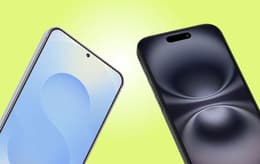
Galaxy S25+ • Unlocked vs iPhone 14 • Locked T-Mobile

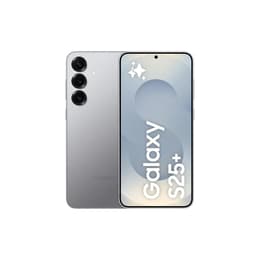
Galaxy S25+ • Unlocked
Starting at

Refurbished price:$570.79

Versus $999.99 new

See options
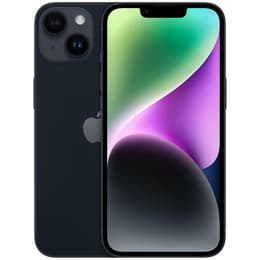
iPhone 14 • Locked T-Mobile
Starting at

Refurbished price:$269.00

Versus $599.00 new

See options

Ratings

The Samsung Galaxy S25 Plus, released in early 2025, and the Apple iPhone 14, launched in late 2022, represent distinct approaches to flagship smartphone design and functionality. While both devices offer robust performance and advanced camera systems, they differ significantly in their operating systems, display technologies, and overall feature sets. This comparison aims to highlight the practical distinctions between these two devices, helping users understand which might better suit their daily needs.

Scores

Durability

When considering the long-term usability of these devices, their release timelines and software support are key factors.

  • Release Timeline: The Galaxy S25 Plus, introduced in February 2025, benefits from being a more recent model compared to the iPhone 14, which debuted in September 2022. This age difference means the Galaxy S25 Plus will likely receive software updates for a longer duration.
  • Software Longevity: Samsung has committed to providing seven years of operating system and security updates for the Galaxy S25 series, extending support until approximately 2032. The iPhone 14, running on iOS, typically receives major iOS updates for about five to six years from its release, offering a slightly shorter, though still substantial, support period.
  • Repairability: The Galaxy S25 Plus generally offers a more straightforward repair experience, utilizing standard Philips screws and featuring an improved battery pull pouch, contributing to a higher repairability assessment by some experts. In contrast, while the iPhone 14 introduced an internal redesign that made some hardware components more accessible, its repairability score was later adjusted downwards due to software authentication requirements for replacement parts, which can complicate independent repairs.

Release Year

2025

2022

Last OS Compatibility

No

Yes

OS

Android

iOS

Foldable

No

No

Performance

Both devices deliver capable performance for everyday tasks, though they approach it with different hardware generations.

  • Processing Power: The Galaxy S25 Plus is equipped with a current-generation processor, designed to handle demanding applications and multitasking with efficiency. This results in smooth navigation and responsive interactions, even with intensive usage. The iPhone 14 utilizes a previous-generation processor, which still provides a fluid user experience for most applications and gaming, demonstrating consistent performance across various tasks.
  • Multitasking and Storage: The Galaxy S25 Plus typically features a larger amount of RAM, which can contribute to a smoother experience when switching between many open applications or running memory-intensive processes. Both devices offer various internal storage configurations, allowing users to choose based on their content and application needs.
  • Battery Behavior: The Galaxy S25 Plus houses a larger battery capacity, which, combined with its efficient processor, often translates to extended usage times, with many users reporting it can last through a full day or more of varied use. The iPhone 14 also provides reliable battery performance, generally sufficient for a full day of typical usage.

Memory (GB)

12 GB

6 GB

Screen quality

The visual experience on these smartphones is shaped by their respective display technologies and specifications.

  • Display Technology and Resolution: The Galaxy S25 Plus features a 6.7-inch Dynamic AMOLED 2X display with a Quad HD+ resolution, offering sharp details and vibrant colors. The iPhone 14 comes with a 6.1-inch Super Retina XDR OLED display, providing deep blacks and accurate color reproduction at a high pixel density.
  • Refresh Rate and Brightness: The Galaxy S25 Plus boasts an adaptive refresh rate of up to 120Hz, contributing to smoother scrolling and more fluid animations, alongside a high peak brightness for clear visibility in various lighting conditions. The iPhone 14 maintains a standard 60Hz refresh rate, which is suitable for most content, and offers strong peak brightness for outdoor use and HDR content.
  • Viewing Experience: The larger screen size of the Galaxy S25 Plus provides a more expansive canvas for media consumption and productivity. Both displays offer excellent clarity and color accuracy, making them suitable for viewing photos, videos, and text.

Resolution

1440x3120

1170 x 2532

Screen type

Dynamic LTPO AMOLED 2X

Super Retina XDR OLED

Audiovisual

Both smartphones offer capable camera systems designed to capture high-quality images and videos, though with different strengths.

  • Rear Camera Systems: The Galaxy S25 Plus features a versatile triple-camera setup, including a high-resolution main sensor, an ultra-wide lens, and a dedicated telephoto lens for optical zoom, allowing for greater flexibility in framing shots. The iPhone 14 is equipped with a dual-camera system, comprising a main wide-angle lens with sensor-shift optical image stabilization and an ultra-wide lens.
  • Photography Performance: The Galaxy S25 Plus excels in offering a range of focal lengths, including optical zoom, which is beneficial for capturing distant subjects without significant loss of detail. The iPhone 14 leverages its Photonic Engine for enhanced low-light performance across its cameras, producing bright and detailed images even in challenging conditions.
  • Video Capabilities: Both devices support high-resolution video recording. The Galaxy S25 Plus can record in 8K resolution, offering a high level of detail. The iPhone 14 features an Action Mode for highly stabilized video capture, making it suitable for recording while in motion, and supports Dolby Vision HDR video.

Miscellaneous

Beyond core features, several other elements contribute to the overall user experience and practical utility of these devices.

  • Connectivity and Ports: The Galaxy S25 Plus supports the latest Wi-Fi 7 standard, offering potentially faster wireless speeds, and features a USB-C port for charging and data transfer. The iPhone 14 supports Wi-Fi 6 and utilizes Apple's proprietary Lightning port. Both devices offer 5G connectivity for fast mobile data.
  • Biometric Security: The Galaxy S25 Plus incorporates an ultrasonic in-screen fingerprint sensor for secure and convenient unlocking. The iPhone 14 relies on its advanced Face ID system for facial recognition.
  • Design and Build: The Galaxy S25 Plus features a design with flat metal edges and Gorilla Glass Victus 2 for durability. The iPhone 14 has a Ceramic Shield front cover and an aluminum design, offering robust protection against drops and scratches. The iPhone 14's US models are eSIM-only, while the Galaxy S25 Plus supports both physical SIM and eSIM.

Weight

7 oz

6 oz

Screen size (inches)

6.7

6.1

Network

5G

5G

SIM card

Physical SIM + eSIM

eSIM

Carrier compatibility

Unlocked

T-Mobile

Choosing between the Samsung Galaxy S25 Plus and the Apple iPhone 14 involves weighing the benefits of a newer Android flagship against a slightly older, yet still capable, iOS device. Users frequently praise the Galaxy S25 Plus for its expansive and vibrant display, its long-lasting battery, and the inclusion of advanced AI features that enhance daily interactions. Some users, however, have noted occasional inconsistencies in camera performance compared to its predecessors.

The iPhone 14 is often lauded by its users for its consistent and reliable performance, its intuitive iOS ecosystem, and its strong camera capabilities, particularly in low-light conditions and video stabilization. Criticisms sometimes point to its 60Hz display, which can feel less fluid than higher refresh rate screens, and the complexities introduced by its parts pairing system for repairs.

Users prioritizing a larger, higher-resolution display with a smoother refresh rate, along with the latest Android features and a dedicated telephoto camera, may find the Galaxy S25 Plus well-suited to their needs. Its longer software support window and more accessible hardware for repairs could also be significant advantages. Conversely, users who value the consistent performance and user experience of iOS, robust video recording features, and a strong ecosystem of apps and services may lean toward the iPhone 14. For those seeking an eco-friendly alternative, both models are available as quality-assured refurbished options, providing a sustainable choice for acquiring advanced technology.


See all articles

Our recent comparisons