
Galaxy Tab S8 Ultra (14.6", 2022) vs iPad Air 5 (2022, M1 series)

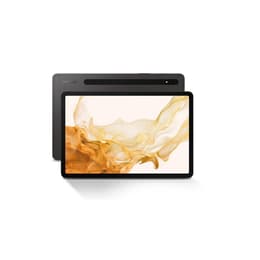
Galaxy Tab S8 Ultra (14.6", 2022)
Starting at

Refurbished price:$435.00

Versus $1,049.00 new

See options
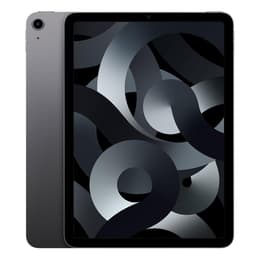
iPad Air 5 (2022, M1 series)
Starting at

Refurbished price:$297.00

Versus $599.00 new

See options

Ratings

The Samsung Galaxy Tab S8 Ultra and the Apple iPad Air (2022) M1 Series represent distinct approaches to the modern tablet experience, both released in 2022. While the Galaxy Tab S8 Ultra runs on Android, offering a vast, expansive display, the iPad Air operates on iPadOS, focusing on a more compact form factor with powerful internal components. These devices cater to different user preferences, primarily differing in their operating systems, screen dimensions, and ecosystem integration.

Scores

Durability

When considering the long-term usability of these tablets, their release timelines and software support are key factors. Both devices were launched in 2022, meaning they have already received several years of software updates.

  • Software Longevity: The Galaxy Tab S8 Ultra is expected to receive four years of Android OS updates and five years of security updates from its release, extending its functional life with current software features and security patches until around 2027. The iPad Air (2022) M1, running iPadOS, typically benefits from Apple's longer software support, often receiving major OS updates for five to six years, potentially offering a slightly longer period of feature updates.
  • Physical Durability: The Galaxy Tab S8 Ultra features an Armor Aluminum body, designed to be more resistant to scratches and bending compared to its predecessors. The iPad Air also boasts a durable aluminum case with flat sides. Both are built to withstand daily use, though their large screen sizes necessitate careful handling.
  • Practical Lifespan: For users who prioritize having the latest software features, the iPad Air might offer a marginally extended period of major OS updates. However, both tablets are built to last and will remain functional for many years beyond their official software support, especially for core tasks.

Release Year

2022

2022

Last OS Compatibility

Yes

Yes

OS

Android

iPadOS

Performance

The performance capabilities of these tablets are central to their user experience, influencing everything from app responsiveness to demanding creative tasks.

  • Processing Power: The Galaxy Tab S8 Ultra is equipped with a powerful current-generation processor, enabling it to handle demanding applications and multitasking smoothly. Users report a snappy and responsive experience across various tasks. The iPad Air (2022) M1 features a highly capable processor that delivers desktop-class performance, making it exceptionally smooth for intensive tasks like video editing, graphic design, and high-fidelity gaming.
  • Multitasking and Responsiveness: The Galaxy Tab S8 Ultra offers various RAM configurations, up to 16GB, which supports extensive multitasking and running multiple applications simultaneously without slowdowns. The iPad Air, with its optimized iPadOS and efficient processor, also provides a fluid multitasking experience, allowing users to switch between apps and manage workflows effectively.
  • Storage and Battery Behavior: The Galaxy Tab S8 Ultra provides flexible storage options, ranging up to 512GB, with the added benefit of expandable storage via a microSD card, which is useful for large media libraries or professional files. Its large 11,200 mAh battery generally provides around 9 to 9.5 hours of mixed use, though heavy usage or high refresh rate settings can reduce this. The iPad Air comes with 64GB or 256GB of internal storage, without expansion capabilities. Its battery typically offers about 5 hours of continuous video playback at maximum brightness, with general use extending this duration.

Memory (GB)

8 GB

8 GB

Screen quality

The display is a primary interaction point for any tablet, and these two devices offer distinct visual experiences.

  • Display Technology and Size: The Galaxy Tab S8 Ultra features a massive 14.6-inch Super AMOLED display, which is known for its deep blacks, vibrant colors, and excellent contrast. This expansive screen provides an immersive viewing experience, particularly for media consumption and productivity. The iPad Air (2022) M1 comes with a 10.9-inch Liquid Retina IPS LCD display, offering accurate color reproduction and good brightness.
  • Resolution and Clarity: The Tab S8 Ultra's display has a resolution of 2960 x 1848 pixels, resulting in a pixel density of 240 ppi, which provides sharp and detailed visuals. The iPad Air features a 2360 x 1640 pixel resolution, with a pixel density of 264 ppi, ensuring crisp text and images.
  • Refresh Rate and Brightness: The Galaxy Tab S8 Ultra supports a 120Hz refresh rate, which makes scrolling, animations, and gaming feel exceptionally smooth and fluid. It offers a typical brightness of around 420-500 nits, sufficient for most indoor and outdoor conditions. The iPad Air has a standard 60Hz refresh rate, which is adequate for most tasks but less fluid than a 120Hz display. Its display reaches 500 nits of brightness, providing good visibility in various lighting environments.

Resolution

1848 x 2960

2360 x 1640

Screen type

Super AMOLED

Liquid Retina display

Pixel density

240ppp

264ppp

Audiovisual

While tablets are not typically primary photography devices, their camera systems are increasingly important for video calls and document scanning.

  • Rear Camera System: The Galaxy Tab S8 Ultra includes a dual rear camera setup with a 13MP main sensor and a 6MP ultrawide sensor. This system is capable of capturing decent photos with good color reproduction, suitable for general use. The iPad Air (2022) M1 features a single 12MP wide rear camera. It performs well for document scanning and casual photography, though it lacks advanced features found in some smartphones.
  • Front Camera and Video Conferencing: The Tab S8 Ultra stands out with its dual 12MP front cameras (wide and ultrawide), which are highly regarded for video conferencing due to their clarity and auto-framing technology that keeps the user centered in the frame. The iPad Air also features a 12MP ultrawide front camera with Apple's Center Stage feature, which digitally pans and zooms to keep subjects in view during video calls.
  • Video Recording and Audio: Both tablets can record video at up to 4K resolution. The Tab S8 Ultra supports 4K at 60fps on its rear cameras and 4K at 30fps on its front cameras. The iPad Air records 4K video at various frame rates up to 60fps with its rear camera and 1080p at 30/60fps with its front camera. Both devices offer good audio experiences, with the Tab S8 Ultra featuring quad speakers with Dolby Atmos and the iPad Air providing stereo speakers that are clear for media consumption.

Miscellaneous

Beyond core specifications, several practical elements contribute to the overall user experience and versatility of these tablets.

  • Connectivity and Ports: The Galaxy Tab S8 Ultra supports Wi-Fi 6E and Bluetooth 5.2, offering fast and reliable wireless connections. It includes a USB-C 3.2 port for data transfer and charging, along with a microSD card slot for expandable storage. The iPad Air (2022) M1 features Wi-Fi 6 and Bluetooth 5.0, providing robust wireless capabilities. Its USB-C port supports USB 3.1 Gen 2, allowing for faster data transfer speeds. Neither device includes a 3.5mm headphone jack.
  • Sensors and Biometrics: The Tab S8 Ultra incorporates an under-display optical fingerprint sensor for secure authentication. It also includes an accelerometer, gyro sensor, geomagnetic sensor, light sensor, and hall sensor. The iPad Air features Touch ID integrated into its top button for fingerprint authentication. It also has an accelerometer, gyro, compass, and barometer.
  • Dimensions and Handling: The Galaxy Tab S8 Ultra is a notably large and thin device, measuring 326.4 x 208.6 x 5.5 mm and weighing 726g (Wi-Fi model). Its size makes it ideal for desktop-like productivity or immersive media viewing, though one-handed use can be challenging. The iPad Air is more compact and lighter at 247.6 x 178.5 x 6.1 mm and 461g (Wi-Fi model), making it more portable and comfortable for extended handheld use.

Weight

25 oz

16 oz

Screen size (inches)

14.6

10.9

Network

Wi-Fi

Wi-Fi

Carrier compatibility

Without SIM Port

Without SIM Port

The Samsung Galaxy Tab S8 Ultra and the iPad Air (2022) M1 Series each offer compelling features, but they cater to different user needs and preferences, as reflected in user feedback.

Users often praise the Galaxy Tab S8 Ultra for its expansive and vibrant Super AMOLED display, which provides an unparalleled viewing experience for movies, creative work, and multitasking. The inclusion of the S Pen in the box and its robust Android ecosystem with features like Samsung DeX are frequently highlighted as significant advantages for productivity-focused users. However, some users note that its large size can make it less portable and cumbersome for casual, one-handed use. Battery life, while substantial, can be impacted by the large, high-refresh-rate screen, leading to more frequent charging for heavy users.

The iPad Air (2022) M1 is widely lauded for its exceptional performance, powered by the M1 chip, which delivers smooth and responsive operation for demanding applications and gaming. Its more compact and lighter design makes it highly portable and comfortable for a wider range of uses. The iPadOS ecosystem is often praised for its intuitive interface and vast selection of optimized applications. Criticisms sometimes point to the standard 60Hz refresh rate, which some users accustomed to higher refresh rates might notice, and the lack of expandable storage.

Users prioritizing a large, immersive display for media consumption, digital art, or a desktop-like Android experience with expandable storage and an included stylus may find the Galaxy Tab S8 Ultra well-suited to their needs. Conversely, users who value a more compact, highly portable tablet with top-tier performance for creative tasks, a vast app ecosystem, and a slightly longer software update cycle might lean toward the iPad Air (2022) M1. Both devices are excellent choices, and for those looking for a more sustainable option, quality-assured refurbished models of either tablet are readily available, offering an eco-friendly alternative.


See all articles

Our recent comparisons