
Galaxy Tab S9 FE (10.9", 2023) vs iPad Air 5 (2022, M1 series)

Galaxy Tab S9 FE (10.9", 2023)
Starting at

Refurbished price:$245.28

Versus $549.00 new

See options
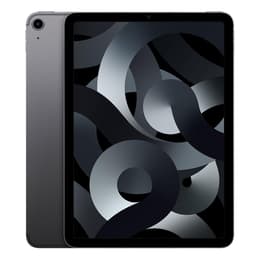
iPad Air 5 (2022, M1 series)
Starting at

Refurbished price:$297.00

Versus $599.00 new

See options

Ratings

The Samsung Galaxy Tab S9 FE, released in October 2023, and the Apple iPad Air (2022) M1 Series, launched in March 2022, represent two distinct approaches to the tablet experience. While both offer a 10.9-inch display, they operate on different ecosystems, with the Galaxy Tab S9 FE running Android and the iPad Air utilizing iPadOS. A key differentiator lies in their core processing power and stylus integration, influencing their suitability for various user needs.

Scores

Durability

When considering the long-term usability of these tablets, their release timelines and software support policies are important factors.

  • Software Longevity: The Galaxy Tab S9 FE launched with Android 13 and is promised four major OS updates, extending its support until Android 17, along with five years of security patches. The iPad Air (2022) M1, running iPadOS, typically receives several years of software updates, with its powerful M1 chip ensuring it can handle future software advancements.
  • Durability Features: The Galaxy Tab S9 FE features an IP68 rating for water and dust resistance, offering a degree of protection against environmental elements. The iPad Air (2022) M1 does not carry an official IP rating, though Apple devices are generally known for their robust build quality.
  • Practical Lifespan: Both devices are designed for a practical lifespan extending several years, with their respective software update commitments playing a significant role in their continued functionality and security.

Release Year

2023

2022

Last OS Compatibility

Yes

Yes

OS

Android

iPadOS

Performance

The performance capabilities of these tablets are largely determined by their internal components, impacting how smoothly they handle various tasks.

  • Processing Power: The Galaxy Tab S9 FE is equipped with an Exynos 1380 processor, which users report handles media consumption and everyday tasks efficiently. However, some users note that it may show limitations with very demanding applications or extensive multitasking. The iPad Air (2022) M1 features the Apple M1 chip, providing substantial processing power that allows for smooth operation with graphics-intensive games, video editing, and complex multitasking.
  • Memory and Storage: The Galaxy Tab S9 FE offers 6GB or 8GB of RAM and 128GB or 256GB of internal storage, with the added flexibility of microSD card expansion. The iPad Air (2022) M1 comes with 8GB of RAM and storage options of 64GB or 256GB, without expandable storage.
  • Battery Performance: The Galaxy Tab S9 FE houses an 8000 mAh battery, with some users indicating that heavy usage might require more frequent charging. The iPad Air (2022) M1 has a 7606 mAh battery, and users generally experience around 8 to 10 hours of use on a single charge.

Memory (GB)

6 GB

8 GB

Screen quality

The visual experience on a tablet is heavily influenced by its display technology and specifications.

  • Display Technology and Resolution: The Galaxy Tab S9 FE features a 10.9-inch IPS LCD display with a resolution of 2304 x 1440 pixels. The iPad Air (2022) M1 also has a 10.9-inch display, utilizing Liquid Retina IPS technology with a resolution of 2360 x 1640 pixels.
  • Brightness and Color: The iPad Air's display offers 500 nits of brightness, P3 wide color gamut, and True Tone technology for adaptive color adjustment, contributing to vibrant and accurate visuals. While the Galaxy Tab S9 FE's LCD panel provides respectable colors, its brightness may be less optimal in very bright outdoor conditions compared to some premium displays.
  • Refresh Rate and Smoothness: The Galaxy Tab S9 FE supports a 90Hz refresh rate, which contributes to smoother scrolling and a more fluid user interface. The iPad Air (2022) M1 features a standard 60Hz refresh rate.

Resolution

1440 x 2304

2360 x 1640

Screen type

IPS LCD

Liquid Retina display

Pixel density

250ppp

264ppp

Audiovisual

Both tablets include camera systems designed for various uses, from video calls to casual photography.

  • Rear Camera Capabilities: The Galaxy Tab S9 FE is equipped with an 8MP rear camera, which is generally considered suitable for basic tasks like scanning documents or quick snapshots. The iPad Air (2022) M1 features a 12MP wide rear camera, capable of recording 4K video and offering decent performance for general photography.
  • Front Camera Performance: For video calls and selfies, the Galaxy Tab S9 FE includes a 12MP front camera. The iPad Air (2022) M1 also has a 12MP ultra-wide front camera, which is enhanced by the Center Stage feature that keeps the subject in frame during video calls.
  • Audio Experience: Both tablets feature stereo speakers, providing a suitable audio experience for media consumption. The Galaxy Tab S9 FE's speakers are noted by users for their impressive loudness.

Miscellaneous

Beyond core specifications, several practical features contribute to the overall user experience of these tablets.

  • Stylus Integration: The Galaxy Tab S9 FE comes with an S Pen included, which is a passive stylus (not requiring charging or Bluetooth for basic functions) but offers pressure sensitivity and button shortcuts for note-taking and drawing. The iPad Air (2022) M1 supports the Apple Pencil 2nd Generation, which is sold separately and offers advanced features like magnetic attachment and wireless charging.
  • Connectivity and Ports: Both tablets feature a USB-C port. The Galaxy Tab S9 FE uses USB 2.0, while the iPad Air (2022) M1 includes a faster USB 3.2 Gen 2 port, allowing for quicker data transfers. Both support Wi-Fi 6 and Bluetooth (5.3 for Samsung, 5.0 for Apple). The iPad Air also offers optional 5G connectivity.
  • Biometric Security and Design: The Galaxy Tab S9 FE incorporates a side-mounted fingerprint sensor for secure unlocking. The iPad Air (2022) M1 also uses Touch ID integrated into its power button. In terms of physical design, the Galaxy Tab S9 FE measures 254.3 x 165.8 x 6.5 mm and weighs 523g (Wi-Fi model), while the iPad Air (2022) M1 is slightly more compact at 247.6 x 178.5 x 6.1 mm and lighter at 460g.

Weight

15 oz

16 oz

Screen size (inches)

10.9

10.9

Network

Wi-Fi

Wi-Fi

Carrier compatibility

Without SIM Port

Without SIM Port

The Samsung Galaxy Tab S9 FE and the Apple iPad Air (2022) M1 Series cater to different user priorities, each excelling in specific areas based on user feedback.

Users often praise the Galaxy Tab S9 FE for its included S Pen, which provides a natural writing and drawing experience right out of the box. Its Android operating system, with Samsung's One UI, is frequently lauded for its extensive customization options and features like DeX mode for a more desktop-like interface. However, some users have noted that its battery life might not consistently last a full day with heavy use, and its performance, while capable for most tasks, can show limitations with very demanding applications or intense gaming. The rear camera is also generally considered basic.

Conversely, the iPad Air (2022) M1 is highly regarded for its powerful performance, driven by the M1 chip, which enables smooth operation for creative professionals, gamers, and those who engage in intensive multitasking. Its Liquid Retina display is appreciated for its clarity and vibrant colors, and the front-facing camera with Center Stage is a popular feature for video conferencing. Common criticisms include its 60Hz refresh rate, which some users find less fluid compared to higher refresh rate displays, and the placement of the front camera when using the device in landscape orientation for video calls. The base storage option of 64GB can also be a limiting factor for some users.

Users prioritizing an integrated and capable stylus for note-taking, drawing, and a highly customizable Android experience may find the Galaxy Tab S9 FE well-suited to their needs. Those who require top-tier performance for demanding applications, a robust ecosystem for creative work, and a consistently smooth user experience will likely lean towards the iPad Air (2022) M1. Both devices offer compelling features, and considering a quality-assured refurbished option can provide an eco-friendly alternative for either choice.


See all articles

Our recent comparisons