
Compare models
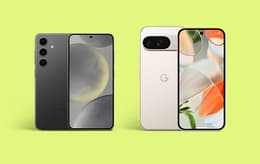
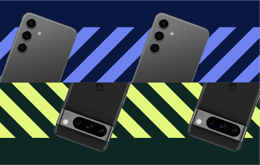
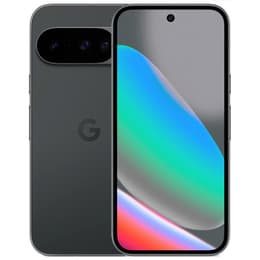
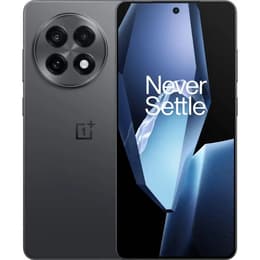
Google Pixel 10 • Unlocked vs OnePlus 13R • Unlocked
- 1-year warranty
- Free standard shipping
- Free 30-day returns
Differences at a glance
The Google Pixel 10 (2025) and the OnePlus 13R (2025) are prominent unlocked smartphones offering distinct approaches to daily mobile computing. While the Google Pixel 10 emphasizes smart software integration and a compact form factor running Android, the OnePlus 13R focuses on raw endurance and fast charging capabilities on its own distinct version of Android. Deciding between these two devices largely depends on whether you prefer streamlined software support or high-capacity battery performance.
Available Models
Color
Storage (GB)
Scores
Durability
Long-term usability differs notably between these two handsets based on update commitments and hardware endurance.
- Software longevity: The Google Pixel 10 provides an extended multi-year update timeline covering major operating system upgrades, whereas the OnePlus 13R features a slightly shorter scheduled software support window.
- Build and repair: Both devices offer robust everyday durability features, though structural repairability scores vary depending on official component availability and regional service center access.
- Expected lifespan: Daily hardware wear is managed efficiently on both models, ensuring reliable performance across several years of typical ownership.
Release Year
2025
2025
OS
Android
Android
Foldable
No
No
Performance
System responsiveness and daily multitasking handle demanding applications smoothly across both platforms.
- Everyday multitasking: Generous random access memory allocations allow users to switch rapidly between active apps without noticeable stutter or reloading delays.
- Battery behavior: The OnePlus 13R incorporates a remarkably large battery capacity designed to comfortably exceed a full day of heavy usage, while the Google Pixel 10 utilizes a more modest power cell paired with efficient system optimization.
- Storage capacity: Both models offer multiple internal storage configurations to accommodate large media libraries and application files without requiring external expansion cards.
Screen quality
Visual immersion and panel characteristics differ significantly in physical dimensions and output clarity.
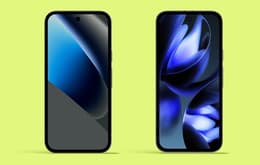
- Display technology: The Google Pixel 10 features a compact OLED panel with vibrant color reproduction, while the OnePlus 13R deploys a larger fluid AMOLED screen with high-resolution clarity.
- Outdoor visibility: High peak brightness capabilities on both screens ensure legibility under direct sunlight during outdoor navigation or reading.
- Refresh rate smoothness: Both panels support high refresh rates up to 120Hz, delivering fluid scrolling through web pages, documents, and social media feeds.
Resolution
1080x2424
1264x2780
Screen type
OLED
LTPO 4.1 AMOLED
Audiovisual
Optics and media playback systems cater to different user priorities regarding photography and audio.
- Camera systems: The Google Pixel 10 utilizes computational photography software to enhance everyday shots and low-light scenes, while the OnePlus 13R emphasizes balanced multi-lens hardware versatility.
- Video recording: Both smartphones capture stable, high-resolution video footage with clear audio tracking for personal memories or casual sharing.
- Media consumption: Built-in stereo speakers provide clear audio output for listening to podcasts, watching videos, or handling hands-free phone calls.
Main camera
Advanced Triple Rear
50 megapixels
Front camera
10.5-megapixel Dual PD selfie camera with autofocus
32 megapixels
Miscellaneous
Physical design factors and connectivity options shape everyday handling and accessory compatibility.
- Physical footprint: The Google Pixel 10 presents a slightly smaller and lighter body that suits single-handed use, whereas the OnePlus 13R offers a broader screen canvas within a marginally heavier frame.
- Connectivity standards: Both devices support modern 5G cellular networks, Wi-Fi standards, and Bluetooth pairing for reliable wireless accessory connections.
- Biometric security: Fast and secure authentication is handled through responsive fingerprint sensors and facial recognition options built into each device. Choosing a quality-assured refurbished option through Back Market can also provide a sustainable choice for environmentally conscious buyers.
Weight
7 oz
7 oz
Screen size (inches)
6.3
6.78
Network
LTE
5G
SIM card
eSIM
Dual Physical SIM
Carrier compatibility
Unlocked
Unlocked
Connector
USB-C
USB-C
What the community thinks
Users prioritizing tight software integration, extended update commitments, and a compact physical footprint will find the Google Pixel 10 well-suited to their daily routines. Conversely, users prioritizing maximum battery endurance, rapid charging speeds, and a larger viewing canvas may lean toward the OnePlus 13R. Both smartphones offer distinct advantages depending on individual daily habits and preferences. Selecting a quality-assured refurbished option through Back Market serves as an eco-friendly alternative that helps reduce electronic waste while acquiring fully functional technology. Evaluating your personal priorities regarding screen size, battery life, and software longevity will guide you toward the ideal device choice.