

Google Pixel 6a • Unlocked vs Google Pixel 8 Pro • Unlocked

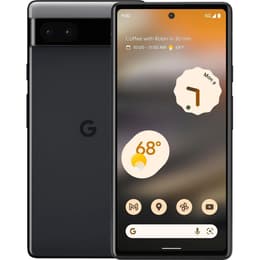
Google Pixel 6a • Unlocked
Starting at

Refurbished price:$141.00

Versus $399.00 new

See options
Google Pixel 8 Pro • Unlocked
Starting at

Refurbished price:$296.00

Versus $899.99 new

See options

Ratings

The Google Pixel 6a, released in July 2022, and the Google Pixel 8 Pro, launched in October 2023, represent different segments within Google's smartphone lineup. While both devices offer a clean Android experience and Google's computational photography, the Pixel 8 Pro introduces a more advanced camera system, a significantly upgraded display, and extended software support compared to its predecessor.

Scores

Durability

The longevity of a smartphone is influenced by its physical durability and the duration of software support it receives. These two Pixel models offer distinct timelines for updates and varying build qualities.

  • Software Support: The Pixel 6a is expected to receive OS updates until at least July 2025 and security updates until at least July 2027. In contrast, the Pixel 8 Pro boasts an industry-leading commitment of seven years of OS, security, and feature drop updates, extending its support until October 2030.
  • Build Materials: The Pixel 6a features a plastic back and an aluminum frame, with Gorilla Glass 3 protecting its display. The Pixel 8 Pro, on the other hand, utilizes Gorilla Glass Victus 2 on both its front and back, paired with an aluminum frame, offering enhanced resistance to drops and scratches.
  • Practical Lifespan: Users prioritizing the longest possible software longevity and robust physical protection will find the Pixel 8 Pro to be a more future-proof option. The Pixel 6a, while still supported for a considerable period, will reach its end-of-life for major OS updates sooner.

Release Year

2022

2023

Last OS Compatibility

Yes

Yes

OS

Android

Android

Foldable

No

No

Performance

Performance in smartphones is about how smoothly tasks are handled, from everyday browsing to demanding applications. Both devices are powered by Google's Tensor processors, but with different generations.

  • Everyday Responsiveness: The Pixel 6a, equipped with the first-generation Google Tensor chip, handles daily tasks, app switching, and general navigation with fluidity. Users report a smooth experience for typical smartphone usage. The Pixel 8 Pro, featuring the newer Google Tensor G3, offers more substantial processing power, resulting in faster app loading times, smoother multitasking, and more efficient handling of intensive applications and games.
  • Multitasking and Storage: The Pixel 6a comes with 6GB of RAM and 128GB of internal storage. While its RAM management is optimized for its capacity, allowing for efficient background app handling, the Pixel 8 Pro offers 12GB of RAM and storage options up to 1TB, providing significantly more headroom for extensive multitasking and storing large files.
  • Battery Behavior: The Pixel 6a has a 4410 mAh battery, with users often reporting it lasts through a full day of moderate use, and its adaptive battery features optimize power consumption over time. The Pixel 8 Pro houses a larger 5050 mAh battery. While it generally offers good battery life, some heavy users have noted that its endurance, while improved over previous Pro models, may not always extend significantly beyond a full day with intensive use.

Memory (GB)

6 GB

12 GB

Screen quality

The display is a primary interface for smartphone interaction, and these two Pixel phones offer different visual experiences.

  • Display Technology and Size: The Pixel 6a features a 6.1-inch OLED display, providing vibrant colors and deep blacks. The Pixel 8 Pro has a larger 6.7-inch LTPO OLED display, which allows for more screen real estate and a more immersive viewing experience.
  • Refresh Rate and Smoothness: The Pixel 6a's display operates at a standard 60Hz refresh rate. While this is sufficient for most users, the Pixel 8 Pro offers an adaptive refresh rate ranging from 1Hz to 120Hz. This higher and variable refresh rate provides noticeably smoother scrolling and more fluid animations, enhancing the overall user experience, especially in fast-paced content or gaming.
  • Brightness and Clarity: Both phones offer clear displays with good resolution. The Pixel 6a has a resolution of 1080 x 2400 pixels. The Pixel 8 Pro, with its 1344 x 2992 pixel resolution and significantly higher peak brightness of up to 2400 nits, offers superior visibility in bright outdoor conditions and more impactful HDR content viewing.

Resolution

1080 x 2400

1344 x 2992

Screen type

OLED

LTPO OLED

Audiovisual

Google Pixel phones are known for their camera capabilities, and while both models excel in photography, the Pixel 8 Pro introduces more advanced hardware and software features.

  • Camera System Configuration: The Pixel 6a features a dual-camera setup with a 12.2 MP wide lens and a 12 MP ultrawide lens. The Pixel 8 Pro boasts a more versatile triple-camera system, including a 50 MP wide lens, a 48 MP ultrawide lens, and a 48 MP telephoto lens with 5x optical zoom.
  • Photography Performance: The Pixel 6a is praised for its computational photography, delivering excellent daytime photos and capable low-light performance for its class. The Pixel 8 Pro significantly enhances image quality across various conditions, offering improved detail, dynamic range, and superior low-light capabilities, often attributed to its larger sensors and advanced image processing. Its telephoto lens also provides greater flexibility for zoomed shots.
  • Video and Audio Quality: Both devices are capable of recording 4K video. The Pixel 8 Pro offers more advanced video features and generally produces higher quality video with better stabilization. For audio, both phones provide clear microphone quality for calls and recording, and users often note the Pixel 6a's stereo speakers deliver a good media consumption experience. The Pixel 8 Pro also features stereo speakers, contributing to an immersive audio experience.

Main camera

12.2 megapixels

50 megapixels

Front camera

8 megapixels

10.5 megapixels

Miscellaneous

Beyond core features, several practical elements contribute to the overall user experience and daily convenience of these smartphones.

  • Connectivity and Ports: Both the Pixel 6a and Pixel 8 Pro support 5G connectivity. The Pixel 6a includes Wi-Fi 6E and Bluetooth 5.2. The Pixel 8 Pro steps up with Wi-Fi 7 and Bluetooth 5.3, offering potentially faster and more stable wireless connections. Both devices utilize a USB-C port for charging and data transfer, with the Pixel 6a featuring USB-C 3.1 and the Pixel 8 Pro upgrading to USB-C 3.2.
  • Biometric Security: The Pixel 6a relies on an under-display fingerprint sensor for secure unlocking. The Pixel 8 Pro also features an under-display fingerprint sensor and adds secure Face Unlock capabilities, providing more options for biometric authentication.
  • Physical Design and Handling: The Pixel 6a is a more compact device, weighing 178g with dimensions of 152.2 x 71.8 x 8.9 mm, making it comfortable for one-handed use. The Pixel 8 Pro is larger and heavier at 213g and measures 162.6 x 76.5 x 8.8 mm, reflecting its larger display and battery. The Pixel 8 Pro's matte back glass is noted for repelling smudges effectively.

Weight

6 oz

7 oz

Screen size (inches)

6.1

6.7

Network

5G

5G

SIM card

Physical SIM + eSIM

Physical SIM + eSIM

Carrier compatibility

Unlocked

Unlocked

The Google Pixel 6a and Pixel 8 Pro cater to different user needs, each with its own set of strengths and considerations. Users often praise the Pixel 6a for its exceptional camera performance relative to its segment, its compact size, and the clean, unadulterated Android experience. Common criticisms for the Pixel 6a include its 60Hz display, which some find less smooth than higher refresh rate screens, and a fingerprint sensor that can sometimes be inconsistent.

The Pixel 8 Pro receives acclaim for its advanced camera system, particularly its AI-enhanced features and impressive low-light photography. Its bright, fluid 120Hz display and Google's commitment to seven years of software updates are also frequently highlighted as major advantages. Some users, however, have noted that despite its large battery, real-world battery life for heavy usage might not always meet expectations, and its larger size can be a factor for those preferring smaller devices.

Users prioritizing a more compact device with a strong camera for everyday photos and a pure Android experience will find the Pixel 6a well-suited to their needs. It remains a capable device for general use and offers a solid foundation for those seeking an eco-friendly, quality-assured refurbished option. Conversely, users who demand the latest in camera technology, a top-tier display with a high refresh rate, extended software longevity, and robust performance for demanding tasks will lean towards the Pixel 8 Pro. This device is designed for those who want a premium smartphone experience with a long-term commitment to updates, making it another excellent choice for a refurbished device.

See all articles

Our recent comparisons