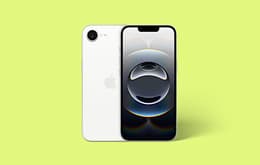

Google Pixel 7 • Unlocked vs iPhone 16e • Unlocked

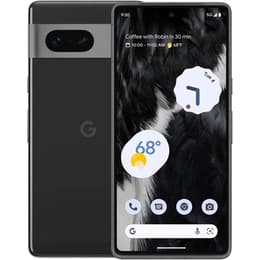
Google Pixel 7 • Unlocked
Starting at

Refurbished price:$185.99

Versus $599.99 new

See options
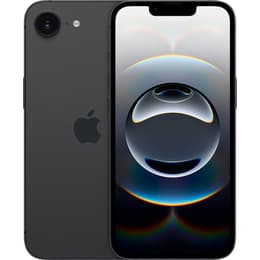
iPhone 16e • Unlocked
Starting at

Refurbished price:$361.00

Versus $599.00 new

See options

Ratings

The Google Pixel 7, released in October 2022, is a smartphone known for its computational photography and clean Android experience. The iPhone 16e, announced in February 2025 and discontinued in March 2026, served as Apple's entry-level iPhone, bringing modern features to a more accessible segment. While the Pixel 7 runs on Google's Android operating system, the iPhone 16e operates on Apple's iOS, offering distinct software ecosystems and user interfaces.

Scores

Durability

When considering the longevity of these devices, both offer substantial software support, though their release timelines differ significantly.

  • Release Timeline: The Google Pixel 7 was released in October 2022, making it an older device compared to the iPhone 16e, which was released in February 2025. The iPhone 16e had a relatively short market availability, being discontinued in March 2026.
  • Software Support: The Pixel 7 is guaranteed five years of OS and security updates from its release date, extending to Android 18 for OS updates and until October 2027 for security patches. Apple typically provides major iOS updates for five to seven years, with security support often extending longer, meaning the iPhone 16e, despite its discontinuation, is expected to receive long-term software support.
  • Practical Lifespan: Both devices are built with durable materials and an IP68 rating for dust and water resistance, suggesting they can withstand daily use. The Pixel 7 features Gorilla Glass Victus on its front and back, while the iPhone 16e uses Ceramic Shield on the front for enhanced drop protection.

Release Year

2022

2025

OS

Android

iOS

Foldable

No

No

Performance

The performance of a smartphone is central to the user experience, influencing everything from app responsiveness to gaming capabilities.

  • Processing Power: The Google Pixel 7 is powered by Google's Tensor G2 chip, designed to optimize machine learning tasks and enhance features like photography and speech recognition. The iPhone 16e features Apple's A18 chip, which provides robust performance for demanding applications and multitasking, though its GPU configuration is slightly different from the main iPhone 16 models.
  • System Responsiveness: Users of the Pixel 7 generally report smooth operation for everyday tasks and moderate gaming, benefiting from the chip's AI capabilities. The iPhone 16e, with its A18 chip, offers a highly responsive experience across iOS, handling complex applications and graphics-intensive games with ease.
  • Multitasking and Storage: The Pixel 7 comes with 8GB of RAM and storage options of 128GB or 256GB. The iPhone 16e also includes 8GB of RAM and offers storage configurations starting at 128GB, with options for 256GB and 512GB, providing ample space for apps and media.

Memory (GB)

8 GB

8 GB

Screen quality

The display is a primary interface for any smartphone, and both devices offer distinct visual experiences.

  • Display Technology: The Google Pixel 7 features a 6.3-inch OLED display, known for its deep blacks and vibrant colors, providing an immersive viewing experience. The iPhone 16e also utilizes a 6.1-inch OLED Super Retina XDR display, offering excellent contrast and color accuracy.
  • Resolution and Clarity: The Pixel 7 has a resolution of 1080 x 2400 pixels, resulting in sharp images and text. The iPhone 16e offers a resolution of 2532 x 1170 pixels, delivering crisp visuals.
  • Brightness and Refresh Rate: The Pixel 7's display can reach up to 1000 nits in high brightness mode and 1400 nits peak brightness, with a 90Hz refresh rate for smoother scrolling. The iPhone 16e provides 800 nits of typical brightness and 1200 nits of peak HDR brightness, but it maintains a standard 60Hz refresh rate.

Resolution

1080 x 2400

2532x1170

Screen type

AMOLED

Super Retina XDR

Audiovisual

Both smartphones offer capable camera systems, each with its own strengths in capturing photos and videos.

  • Rear Camera System: The Google Pixel 7 features a dual-camera setup with a 50 MP main sensor and a 12 MP ultrawide lens, excelling in computational photography features like Photo Unblur and Magic Eraser. The iPhone 16e comes with a single 48 MP rear camera, which includes a 2x in-sensor zoom capability, focusing on high-quality primary shots.
  • Photography Performance: The Pixel 7 is praised for its consistent image quality, particularly in challenging lighting conditions, and its ability to produce natural-looking photos. The iPhone 16e leverages Apple's image processing for reliable and detailed photos, with features like Smart HDR 5.
  • Video Recording and Front Camera: Both devices support 4K video recording. The Pixel 7 has a 10.8 MP front camera. The iPhone 16e features a 12 MP TrueDepth front camera, capable of 4K video, and supports spatial audio recording for videos.

Main camera

50 megapixels

48MP

Front camera

10.8 megapixels

TrueDepth 12MP

Miscellaneous

Beyond core features, several practical elements contribute to the overall user experience and daily convenience.

  • Connectivity and Ports: The Google Pixel 7 supports 5G, Wi-Fi 6E, and Bluetooth 5.2, and uses a USB-C 3.2 port. The iPhone 16e also offers 5G connectivity (via Apple's C1 modem, supporting sub-6GHz), Wi-Fi 6, and Bluetooth 5.3, transitioning to a USB-C port, though with USB 2.0 speeds.
  • Biometric Security and Features: The Pixel 7 includes an under-display optical fingerprint sensor and Face Unlock for secure access. The iPhone 16e relies on Face ID for biometric authentication and introduces an Action Button, replacing the traditional mute switch, offering customizable shortcuts.
  • Design and Handling: The Pixel 7 measures 155.6 x 73.2 x 8.7 mm and weighs 197g, featuring an aluminum frame and glass back. The iPhone 16e is slightly more compact and lighter at 146.7 × 71.5 × 7.8 mm and 167g, with an aluminum frame and glass back, and a design reminiscent of the iPhone 14.

Weight

6 oz

167 oz

Screen size (inches)

6.3

6.1

Network

5G

5G

SIM card

Physical SIM + eSIM

eSIM

Carrier compatibility

Unlocked

Unlocked

The Google Pixel 7 and iPhone 16e cater to different user preferences, reflecting their respective ecosystems and design philosophies. Users often praise the Pixel 7 for its exceptional camera capabilities, particularly its computational photography features that enhance everyday photos and its clean, intuitive Android software experience. Some users, however, have noted that its battery life might require more frequent charging for heavy use, and its 90Hz display, while smooth, isn't the highest refresh rate available.

The iPhone 16e, despite its recent discontinuation, was well-received for bringing modern iPhone features like a powerful A18 chip, a larger OLED display, and Face ID to a broader audience. Its integration with Apple Intelligence was also a significant draw. Potential criticisms often centered on its 60Hz display, the absence of an ultrawide or telephoto camera, and the lack of MagSafe wireless charging.

Users prioritizing advanced camera features, a customizable Android experience, and Google's AI integrations may find the Pixel 7 well-suited to their needs. Conversely, those who value Apple's robust ecosystem, consistent performance, long-term software support, and Face ID security might lean towards the iPhone 16e. Both devices offer a quality-assured refurbished option, providing an eco-friendly alternative for consumers seeking reliable technology.
See all articles

Our recent comparisons