
Google Pixel Fold • Unlocked vs iPhone 14 Pro Max • Locked AT&T

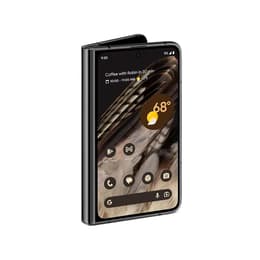
Google Pixel Fold • Unlocked
Starting at

Refurbished price:$590.00

Versus $1,799.00 new

See options
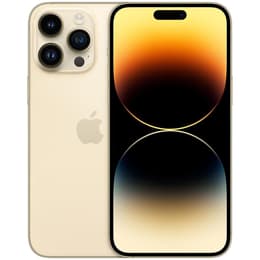
iPhone 14 Pro Max • Locked AT&T
Starting at

Refurbished price:$409.00

Versus $1,399.00 new

See options

Ratings

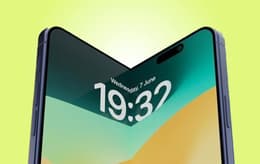
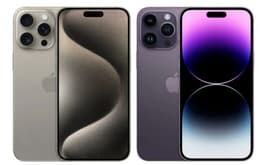
The Google Pixel Fold, released in June 2023, marks Google's entry into the foldable smartphone market, offering a unique form factor that transforms from a compact device into a larger tablet-like screen. In contrast, the iPhone 14 Pro Max, launched in September 2022, represents Apple's traditional flagship smartphone design, prioritizing a singular, expansive display. These devices cater to different user preferences, with the Pixel Fold running on Android and the iPhone 14 Pro Max on iOS, each bringing distinct ecosystems and user experiences.

Scores

Durability

The practical lifespan of a smartphone is influenced by its physical resilience and the duration of software support it receives.

  • Release Timeline and OS Support: The Google Pixel Fold, released in June 2023, is guaranteed five years of OS and security updates from its availability date, extending its software support until at least June 2028. The iPhone 14 Pro Max, launched in September 2022, typically receives iOS updates for approximately 5-6 years from its release, suggesting a similar or slightly longer software longevity.
  • Physical Durability: The Pixel Fold features an external screen with hardened glass and an inner foldable screen with a plastic top layer, which is more susceptible to scratches, even from a fingernail. Initial durability tests showed the Pixel Fold could be fragile under backward bending pressure, with some reports of hardware failure. However, user experiences vary, with some reporting robust performance over several months, especially with hinge protection. The iPhone 14 Pro Max incorporates Ceramic Shield glass for enhanced front display protection and boasts an IP68 rating for dust and water resistance, indicating a solid build.
  • Repairability: The Pixel Fold has a repairability score of 6.5 out of 10, with some components like the USB-C port being difficult to replace due to motherboard attachment, though getting into the device is relatively straightforward. Google also provides spare parts and repair guides through iFixit, making many repairs possible. The iPhone 14 Pro Max's repairability is generally considered moderate, with Apple offering self-service repair options for some components.

Release Year

2023

2022

Last OS Compatibility

Yes

Yes

OS

Android

iOS

Foldable

Yes

No

Performance

Both devices offer robust performance, but their underlying architectures and real-world usage implications differ.

  • Processor Capabilities: The Google Pixel Fold is powered by a current-generation Google Tensor processor, designed for efficient handling of everyday tasks, demanding applications, and Google's advanced AI features. Users generally report smooth daily operation and responsiveness. The iPhone 14 Pro Max features a powerful Apple-designed processor, known for its strong performance in intensive tasks like gaming, video editing, and multitasking, ensuring a fluid user experience.
  • Battery Behavior: The Pixel Fold houses a 4821mAh battery, with user reports indicating pretty good battery life, though some note that charging speeds are not particularly fast. The iPhone 14 Pro Max, with a 4323 mAh battery, is recognized for its extended battery life, often lasting through a full day of heavy use and outperforming its predecessor in battery tests. It supports fast wired and wireless charging.
  • Storage and Multitasking: The Pixel Fold comes with 12GB of RAM and storage options of 256GB or 512GB, supporting smooth multitasking, especially with its larger inner display. The iPhone 14 Pro Max offers 6GB of RAM and storage configurations ranging from 128GB to 1TB, providing ample space and efficient app management within the iOS ecosystem.

Memory (GB)

12 GB

6 GB

Screen quality

The display experience is a primary differentiator, with the Pixel Fold offering a dual-screen foldable design and the iPhone 14 Pro Max a single, expansive display.

  • Display Technology and Size: The Pixel Fold features a 7.6-inch inner foldable OLED screen with a 2208x1840 pixel resolution and a 5.8-inch outer OLED cover display with a 2092x1080 pixel resolution. The outer screen's wider aspect ratio makes it comfortable for one-handed use. The iPhone 14 Pro Max boasts a 6.7-inch Super Retina XDR OLED display with a resolution of 2796x1290 pixels.
  • Brightness and Clarity: Both devices offer vibrant OLED displays with excellent contrast and color accuracy. The Pixel Fold's outer screen reaches a peak brightness of 1,550 nits, and its inner screen reaches 1,450 nits, ensuring good visibility in various lighting conditions. The iPhone 14 Pro Max's display can achieve a typical brightness of 1000 nits and a peak brightness of up to 2000 nits, making it highly visible even in direct sunlight.
  • Refresh Rate and Smoothness: Both displays on the Pixel Fold support a 120Hz refresh rate, contributing to smooth scrolling and responsive interactions. The iPhone 14 Pro Max also features a 120Hz adaptive refresh rate with LTPO technology, which helps in power efficiency while providing a fluid visual experience.

Resolution

1840 x 2208

1290 x 2796

Screen type

Foldable OLED

LTPO Super Retina XDR OLED

Audiovisual

Both smartphones offer advanced camera systems, each with distinct strengths in image processing and hardware.

  • Camera System Capabilities: The Google Pixel Fold features a triple rear camera setup, including a 48MP main sensor with optical image stabilization, a 10.8MP ultrawide camera, and a 10.8MP telephoto lens with 5x optical zoom. It also has a 9.5MP front camera on the cover screen and an 8MP camera above the main display. The iPhone 14 Pro Max includes a triple rear camera system with a 48MP main sensor, a 12MP ultrawide, and a 12MP telephoto lens with 3x optical zoom. It also has a 12MP front-facing camera with autofocus.
  • Photography Performance: The Pixel Fold benefits from Google's computational photography, delivering balanced colors and good detail, particularly excelling in portrait mode and offering a strong 5x optical zoom. Its low-light performance is generally good, though the main sensor is slightly smaller than some other Pixel flagships. The iPhone 14 Pro Max's main camera captures excellent photos with improved quality in medium and low-light conditions, offering great detail and textures. The ultrawide camera also sees improvements in sharpness, and macro photography is enhanced.
  • Video Recording and Audio: Both devices can record video at 4K resolution at up to 60 frames per second. The Pixel Fold offers good video capabilities, similar to other Pixel devices, with nice tonality and color. The iPhone 14 Pro Max is known for its strong video quality, stabilization, and dynamic range, with features like Cinematic mode and ProRes video. Both phones feature stereo speakers for media consumption.

Main camera

48 megapixels

48 megapixels

Front camera

8 megapixels

12 megapixels

Miscellaneous

Beyond core features, several practical elements contribute to the overall user experience of these devices.

  • Connectivity Options: Both the Google Pixel Fold and the iPhone 14 Pro Max support 5G connectivity, Wi-Fi 6 (802.11 ax), and Bluetooth 5.2 or later, ensuring fast and reliable wireless communication. The iPhone 14 Pro Max also supports Wi-Fi 6E.
  • Port Types and Sensors: The Pixel Fold features a USB Type-C port for charging and data transfer, along with useful sensors like a fingerprint sensor, accelerometer, ambient light sensor, gyroscope, and compass/magnetometer. The iPhone 14 Pro Max utilizes a Lightning port and includes an accelerometer, ambient light sensor, proximity sensor, and compass/magnetometer, alongside Face ID for secure authentication.
  • Weight, Dimensions, and Build Materials: The Pixel Fold weighs 283 grams and measures 139.70 x 158.70 x 5.80mm when unfolded, and 5.5 by 3.1 by 0.5 inches when folded, offering a compact yet expansive design. It features Gorilla Glass Victus on the cover and back, with an Ultra Thin Glass cover for the inner display. The iPhone 14 Pro Max weighs 240 grams and measures 160.7 x 77.6 x 7.9 mm, featuring a glass front (Ceramic Shield), glass back, and a stainless steel frame, providing a premium and durable feel.

Weight

7 oz

8 oz

Screen size (inches)

7.6

6.7

Network

5G

5G

SIM card

Physical SIM + eSIM

eSIM

Carrier compatibility

Unlocked

AT&T

Connector

USB-C

Lightning

The Google Pixel Fold and iPhone 14 Pro Max cater to distinct user needs, each excelling in different areas based on their fundamental design philosophies.

Users frequently praise the Pixel Fold for its innovative foldable design, which offers the versatility of a large screen in a more portable form factor. The wider aspect ratio of its outer display is often highlighted as being more usable than other foldables. Its camera system, benefiting from Google's computational photography, also receives positive remarks for balanced images and effective zoom capabilities. However, some users have expressed concerns regarding the durability of the inner screen and the overall robustness of the device, particularly in early models. App optimization for the foldable screen has also been a point of discussion, with some apps not fully utilizing the larger display.

The iPhone 14 Pro Max is consistently lauded for its exceptional battery life, often cited as a key advantage for heavy users. Its powerful processor ensures smooth performance across all tasks, and the camera system is highly regarded for its image quality, especially in challenging lighting conditions, and its video capabilities. The display's brightness and clarity are also frequently praised. Criticisms are less common but sometimes point to the familiar design compared to previous generations and the continued use of the Lightning port.

Users prioritizing a versatile device that can switch between a traditional smartphone and a larger tablet-like experience, coupled with Google's Android ecosystem and advanced camera processing, may find the Pixel Fold well-suited to their needs. Conversely, individuals who value a consistently long-lasting battery, a highly refined and powerful traditional smartphone experience, and Apple's iOS ecosystem with its robust app library and strong video capabilities, will likely lean towards the iPhone 14 Pro Max. Both devices represent quality options in the premium smartphone segment, and considering a quality-assured refurbished option can be a sustainable choice for either model.

See all articles

Our recent comparisons