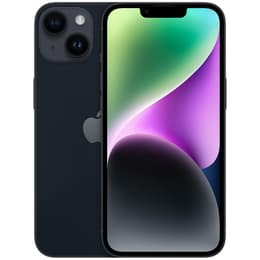
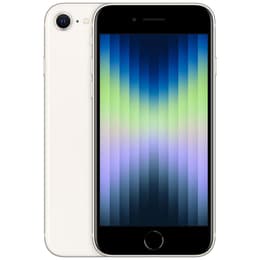
iPhone 14 • Locked AT&T vs iPhone SE (2022) • Locked Verizon

iPhone 14 • Locked AT&T
Starting at

Refurbished price:$225.72

Versus $629.00 new

See options
iPhone SE (2022) • Locked Verizon
Starting at

Refurbished price:$124.00

Versus $429.00 new

See options

Ratings

The iPhone 14 and the iPhone SE (2022) are both smartphones released by Apple in 2022, offering distinct experiences within the iOS ecosystem. While both devices share the same powerful core processor, they diverge significantly in design, display technology, and camera capabilities. The iPhone 14 presents a more contemporary design with an expansive display and advanced camera system, whereas the iPhone SE (2022) maintains a classic compact form factor with a physical home button.

Scores

Durability

When considering the long-term usability of these devices, both the iPhone 14 and iPhone SE (2022) benefit from Apple's consistent software support, ensuring several years of operating system updates and security patches.

  • Software Longevity: Both models, having been released in 2022, are expected to receive iOS updates for a comparable duration, typically around five to six years from their launch. This means users can anticipate continued access to new features and security enhancements for an extended period.
  • Physical Durability: The iPhone 14 features a Ceramic Shield front cover, which offers enhanced protection against drops and scratches. Both devices are rated for water and dust resistance, with the iPhone 14 holding an IP68 rating (maximum depth of 6 meters for up to 30 minutes) and the iPhone SE (2022) an IP67 rating (maximum depth of 1 meter for up to 30 minutes).
  • Repairability Considerations: The iPhone 14 initially received a favorable repairability assessment due to its internal design, but this score was later adjusted downwards due to software limitations related to parts pairing. The iPhone SE (2022) maintains a more traditional internal layout, which may present different repair challenges.

Release Year

2022

2022

Last OS Compatibility

Yes

Yes

OS

iOS

iOS

Foldable

No

No

Performance

Both the iPhone 14 and the iPhone SE (2022) are equipped with a powerful current-generation processor, enabling smooth operation across various applications and tasks. However, there are subtle differences in their configurations and how they manage power.

  • Processing Power: Both devices utilize the same core processor, providing excellent speed and efficiency for everyday use, demanding applications, and mobile gaming. The iPhone 14's processor includes a 5-core graphics processing unit, offering a slight advantage in graphically intensive tasks compared to the iPhone SE (2022)'s 4-core graphics processing unit.
  • Multitasking Capability: The iPhone 14 comes with 6GB of RAM, allowing for more applications to remain active in the background and smoother transitions between them. The iPhone SE (2022) features 4GB of RAM, which is still capable for most multitasking needs but may show limitations with a very high number of concurrently open applications.
  • Battery Performance: The iPhone 14 generally offers longer battery life due to its larger battery capacity and the efficiency of its OLED display. Users often report that the iPhone 14 can comfortably last a full day of typical use. The iPhone SE (2022), with its smaller battery, typically requires more frequent charging for heavy users.

Memory (GB)

6 GB

4 GB

Screen quality

The visual experience on these two iPhones differs significantly, primarily due to their display technologies and physical dimensions.

  • Display Technology and Clarity: The iPhone 14 features a 6.1-inch Super Retina XDR OLED display, which delivers deep blacks, vibrant colors, and excellent contrast. The iPhone SE (2022) has a 4.7-inch Retina HD IPS LCD display, offering good color accuracy and brightness for an LCD panel.
  • Resolution and Brightness: The iPhone 14 provides a higher resolution of 2532x1170 pixels at 460 pixels per inch (ppi), resulting in sharper text and images. It also achieves higher peak brightness levels, especially for HDR content, making it more legible in bright outdoor conditions. The iPhone SE (2022) has a resolution of 1334x750 pixels at 326 ppi and a maximum brightness of 625 nits.
  • Refresh Rate and Viewing Experience: Both devices feature a standard 60Hz refresh rate. The larger, edge-to-edge display of the iPhone 14 offers a more immersive viewing experience for media consumption and gaming, while the iPhone SE (2022)'s compact screen is well-suited for one-handed use and users who prefer a smaller device.

Resolution

1170 x 2532

750 x 1334

Screen type

Super Retina XDR OLED

Retina IPS LCD

Audiovisual

The camera systems on the iPhone 14 and iPhone SE (2022) offer different capabilities, catering to varying photography needs and preferences.

  • Rear Camera System: The iPhone 14 boasts a dual-camera system with a 12MP main sensor featuring a wider aperture and sensor-shift optical image stabilization, alongside a 12MP ultra-wide lens. This setup, enhanced by the Photonic Engine, significantly improves low-light performance and captures more detail. The iPhone SE (2022) features a single 12MP wide camera with optical image stabilization, capable of producing good quality photos in well-lit conditions, but it lacks a dedicated Night mode.
  • Front Camera and Video Recording: The iPhone 14 includes a 12MP TrueDepth front camera with autofocus, offering improved clarity for selfies and video calls, especially in challenging lighting. The iPhone SE (2022) has a 7MP front camera. Both devices support 4K video recording at up to 60 frames per second. The iPhone 14 further enhances video capabilities with Cinematic mode for depth-of-field effects and Action mode for smoother handheld footage.
  • Computational Photography: Both phones benefit from advanced computational photography features like Smart HDR 4 and Deep Fusion, which optimize image quality. However, the iPhone 14's newer hardware and Photonic Engine provide a more advanced processing pipeline for superior results in a wider range of scenarios.

Main camera

12 megapixels

12 megapixels

Front camera

12 megapixels

7 megapixels

Miscellaneous

Beyond the core features, several practical elements differentiate the user experience between the iPhone 14 and iPhone SE (2022).

  • Biometric Authentication and Design: The iPhone 14 relies on Face ID for secure facial recognition and features an all-screen design without a physical home button. The iPhone SE (2022) retains the classic home button with Touch ID for fingerprint authentication, appealing to users who prefer this traditional interaction method.
  • Connectivity and Ports: Both devices support 5G connectivity for faster mobile data speeds and Wi-Fi 6 for efficient wireless networking. Both also utilize the Lightning port for charging and data transfer. The iPhone 14 also includes an Ultra Wideband chip for enhanced spatial awareness and MagSafe compatibility for magnetic accessories and wireless charging.
  • Physical Characteristics: The iPhone 14 is larger and slightly heavier, measuring 146.7 x 71.5 x 7.80 mm and weighing 172 grams. The iPhone SE (2022) is more compact and lighter at 138.4 x 67.3 x 7.3 mm and 144 grams, making it easier for one-handed operation and pocketability.

Weight

6 oz

3 oz

Screen size (inches)

6.1

4.7

Network

5G

5G

SIM card

eSIM

Physical SIM + eSIM

Carrier compatibility

AT&T

Verizon

Connector

Lightning

Lightning

The iPhone 14 and iPhone SE (2022) cater to different user priorities, despite sharing a release year and core processor. User sentiment often highlights the iPhone 14 for its modern design, immersive display, and advanced camera capabilities, making it a strong choice for those who prioritize media consumption, photography, and a contemporary smartphone experience. Criticisms sometimes point to its incremental upgrades over its direct predecessor, but its overall performance and feature set are well-regarded.

Conversely, the iPhone SE (2022) is frequently praised by users who value a compact form factor, the familiarity of Touch ID, and a more traditional iPhone aesthetic. Its powerful processor ensures smooth performance for everyday tasks, making it a practical option for users who don't require the latest display or camera innovations. Some users may find its smaller screen and single camera system to be limitations compared to more premium models.

Users prioritizing a larger, more vibrant OLED display, a versatile dual-camera system with enhanced low-light performance, and a modern, full-screen design will find the iPhone 14 well-suited to their needs. Those who prefer a smaller, more pocketable device, appreciate the physical home button with Touch ID, and primarily use their phone for essential tasks and casual photography may lean toward the iPhone SE (2022). Both models offer a reliable iOS experience, and considering a quality-assured refurbished option for either device can be an eco-friendly alternative.
See all articles

Our recent comparisons