
iPhone 14 • Locked Verizon vs iPhone 15 • Locked T-Mobile

iPhone 14 • Locked Verizon
Starting at

Refurbished price:$299.00

Versus $599.00 new

See options
iPhone 15 • Locked T-Mobile
Starting at

Refurbished price:$379.00

Versus $699.00 new

See options

Ratings

The iPhone 14, released in September 2022, and the iPhone 15, launched in September 2023, represent consecutive generations of Apple's standard smartphone line. While both devices offer a consistent iOS experience, the iPhone 15 introduces several notable advancements, including the Dynamic Island interface, a significantly upgraded main camera, and the adoption of a USB-C port. These differences cater to varying user priorities, from photography enthusiasts to those seeking modern connectivity standards.

Scores

Durability

When considering the longevity of these devices, several factors come into play, including their release timelines, software support, and repairability.

  • Release Timeline and OS Support: The iPhone 15 benefits from being a year newer than the iPhone 14. This typically translates to an additional year of major iOS updates, extending its software longevity. Both devices are expected to receive several years of operating system support, ensuring access to new features and security updates for a considerable period.
  • Repairability: The iPhone 14 initially received a positive repairability assessment due to an internal redesign that made components like the back glass more accessible. However, this score was later adjusted downwards due to software restrictions that complicate repairs with non-Apple parts. The iPhone 15 shares a similar repairability score, indicating that while hardware access might be improved, software authentication for replacement parts remains a factor for independent repairs.
  • Battery Lifespan: Apple has indicated that the batteries in iPhone 15 models are designed to retain 80 percent of their original capacity after 1000 complete charge cycles under ideal conditions. For iPhone 14 models and earlier, this figure is 500 complete charge cycles. This suggests a potentially longer effective battery lifespan for the iPhone 15 under similar usage patterns.

Release Year

2022

2023

Last OS Compatibility

Yes

Yes

OS

iOS

iOS

Foldable

No

No

Performance

The performance of a smartphone is crucial for daily use, encompassing everything from app responsiveness to battery endurance.

  • Processing Power: The iPhone 14 is equipped with a capable processor that handles everyday applications, multitasking, and moderate gaming smoothly. The iPhone 15 features a more advanced processor, which translates to faster app loading times, more fluid multitasking, and enhanced performance in graphically demanding games or intensive applications. This newer processor also contributes to improved power efficiency.
  • Storage and RAM: Both the iPhone 14 and iPhone 15 offer identical storage configurations, starting at 128GB and extending to 256GB and 512GB, providing ample space for most users' photos, videos, and applications. Both models also come with 6GB of RAM, which supports efficient multitasking and smooth transitions between open applications.
  • Battery Performance: The iPhone 14 generally provides all-day battery life for most users, with up to 20 hours of video playback. The iPhone 15 offers comparable or slightly improved battery endurance, also rated for up to 20 hours of video playback. While some iPhone 14 users reported faster battery degradation, the iPhone 15's battery is rated for double the charge cycles to maintain 80% capacity, suggesting better long-term battery health.

Memory (GB)

6 GB

6 GB

Screen quality

The visual experience is a primary interaction point with any smartphone, and both models offer high-quality displays with distinct features.

  • Display Technology and Size: Both the iPhone 14 and iPhone 15 feature 6.1-inch Super Retina XDR OLED displays, delivering deep blacks, vibrant colors, and excellent contrast. The pixel density is similar across both models, providing sharp and clear visuals for text and images.
  • Brightness and Refresh Rate: The iPhone 14 offers a typical brightness of 800 nits and a peak HDR brightness of 1200 nits. The iPhone 15 enhances this with a typical brightness of 1000 nits, a peak HDR brightness of 1600 nits, and a peak outdoor brightness of 2000 nits, making it more visible in bright sunlight. Both devices maintain a standard 60Hz refresh rate, meaning scrolling and animations are smooth but do not feature the adaptive high refresh rates found in Pro models.
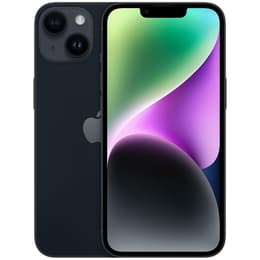
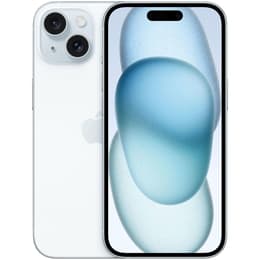
  • Interface Design: A key visual difference is the front-facing design. The iPhone 14 retains the traditional notch at the top of the display. The iPhone 15 replaces this with the Dynamic Island, an interactive pill-shaped area that dynamically displays alerts, activities, and notifications, offering a more modern and integrated user experience.

Resolution

1170 x 2532

1179 x 2556

Screen type

Super Retina XDR OLED

Super Retina XDR OLED

Audiovisual

Camera capabilities are a significant consideration for many users, and the iPhone 15 brings notable advancements over its predecessor.

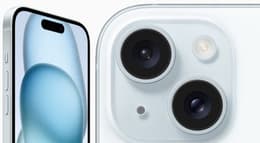
  • Main Camera System: The iPhone 14 features a dual-camera system with a 12MP main sensor and a 12MP ultra-wide sensor. It includes features like Photonic Engine and Smart HDR 4, which enhance low-light performance and overall image quality. The iPhone 15 upgrades to a 48MP main camera sensor, which by default captures 24MP images for improved detail and light capture, while also offering the option for full 48MP photos. It retains a 12MP ultra-wide camera and introduces a 2x telephoto option through sensor cropping, providing more versatile zoom capabilities. The iPhone 15 also benefits from Smart HDR 5 for better dynamic range.
  • Low-Light and Video: Both models offer strong low-light photography performance, with the iPhone 15 showing further improvements due to its larger main sensor and enhanced image processing. For video recording, both support 4K Dolby Vision HDR at up to 60 frames per second, Cinematic mode for depth-of-field effects, and Action mode for stabilized video capture, making them capable tools for various video needs.
  • Front Camera: Both the iPhone 14 and iPhone 15 are equipped with a 12MP front-facing camera that includes autofocus, delivering sharp selfies and clear video calls. Both also benefit from Photonic Engine for improved front-camera image quality.

Main camera

12 megapixels

48 megapixels

Front camera

12 megapixels

12 megapixels

Miscellaneous

Beyond the core features, several practical elements differentiate these two iPhone models.

  • Connectivity and Ports: Both the iPhone 14 and iPhone 15 support 5G cellular connectivity for fast mobile data speeds and Wi-Fi 6 (802.11ax) for efficient wireless networking. A significant change is the charging and data port: the iPhone 14 uses Apple's proprietary Lightning port, while the iPhone 15 transitions to the more universal USB-C port, aligning with industry standards and offering broader compatibility with accessories.
  • Sensors and Safety Features: Both devices include essential sensors such as Face ID for secure authentication, an accelerometer, gyroscope, proximity sensor, ambient light sensor, and barometer. Both also feature Emergency SOS via Satellite, allowing users to connect with emergency services in areas without cellular or Wi-Fi coverage.
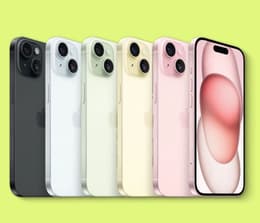
  • Design and Handling: In terms of physical design, both phones feature a durable Ceramic Shield front cover, an aluminum frame, and a glass back. The iPhone 15 introduces a color-infused glass back, offering a slightly different aesthetic. Their dimensions and weight are very similar, with the iPhone 14 measuring 146.7 x 71.5 x 7.8mm and weighing 172g, and the iPhone 15 at 147.6 x 71.6 x 7.8mm and 171g, ensuring a comparable in-hand feel.

Weight

6 oz

171 oz

Screen size (inches)

6.1

6.1

Network

5G

5G

SIM card

eSIM

eSIM

Carrier compatibility

Verizon

T-Mobile

Connector

Lightning

USB-C (USB 2)

The iPhone 14 and iPhone 15 both offer robust smartphone experiences, but the newer model introduces refinements that cater to evolving user expectations. The iPhone 14 is often praised for its reliable performance, solid camera capabilities, and dependable battery life, making it a strong choice for users seeking a proven Apple device without needing the very latest innovations. Some users of the iPhone 14, particularly the Pro models, noted concerns about battery degradation over time.

The iPhone 15, on the other hand, receives commendation for its modern Dynamic Island interface, the significant upgrade to a 48MP main camera with enhanced photographic flexibility, and the convenience of the USB-C port. Early reports of overheating with the iPhone 15 were noted, though Apple addressed these concerns.

Users prioritizing the most current design elements, advanced photographic capabilities, and universal connectivity will find the iPhone 15 well-suited to their needs. Its improved display brightness and potentially longer battery health also contribute to a more future-proof experience. Conversely, individuals who value a slightly more established model that still delivers excellent performance for everyday tasks, and who may not require the newest camera sensor or the Dynamic Island, might find the iPhone 14 to be a practical option.

For those considering either device, exploring quality-assured refurbished options can provide an eco-friendly alternative, extending the life of these products and offering a sustainable choice.


See all articles

Our recent comparisons