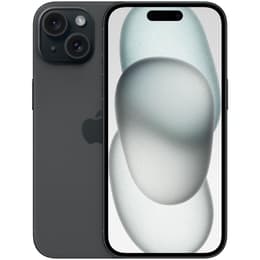
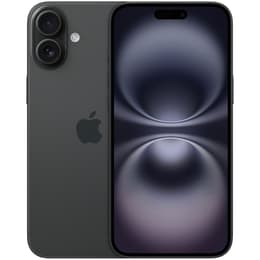

iPhone 15 • Locked AT&T vs iPhone 16 Plus • Unlocked

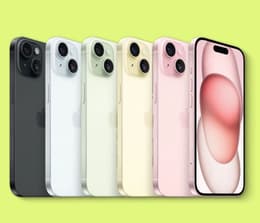
iPhone 15 • Locked AT&T
Starting at

Refurbished price:$348.00

Versus $729.00 new

See options
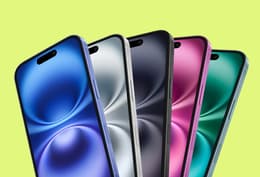
iPhone 16 Plus • Unlocked
Starting at

Refurbished price:$575.98

Versus $829.00 new

See options

Ratings

The iPhone 15, released in September 2023, and the iPhone 16 Plus, launched in September 2024, represent two distinct offerings within Apple's smartphone lineup. While both devices operate on the iOS ecosystem, the iPhone 16 Plus introduces a larger display, an updated processor, and enhanced camera capabilities, building upon the foundation set by its predecessor. This comparison aims to highlight the practical differences between these models, assisting users in making an informed decision, including considering quality-assured refurbished options.

Scores

Durability

When evaluating the long-term usability of these devices, several factors contribute to their expected lifespan.

  • Release Timeline: The iPhone 15 was released in September 2023, while the iPhone 16 Plus followed in September 2024. This generational difference means the iPhone 16 Plus will likely receive software updates for approximately one year longer than the iPhone 15, extending its software longevity.
  • Software Support: Both models are expected to receive iOS updates for a typical duration of 5-6 years from their respective release dates. The iPhone 16 Plus, being the newer device, benefits from a longer period of official software support, ensuring access to the latest features and security patches for an extended time.
  • Physical Durability: Both the iPhone 15 and iPhone 16 Plus feature a Ceramic Shield front cover and an aluminum frame, contributing to their robust build. They also share an IP68 rating for water and dust resistance, allowing submersion up to 6 meters for 30 minutes.

Release Year

2023

2024

Last OS Compatibility

Yes

Yes

Foldable

No

No

Performance

The performance of a smartphone significantly impacts daily usage, from app responsiveness to handling demanding tasks.

  • Processing Power: The iPhone 15 is equipped with the A16 Bionic chip, which features a 6-core CPU and a 5-core GPU, providing smooth performance for everyday applications and multitasking. The iPhone 16 Plus, on the other hand, incorporates the newer A18 chip, built on a more efficient manufacturing process, which offers a generational leap in processing capabilities.
  • Real-World Responsiveness: Users of the iPhone 15 generally experience fluid navigation and quick app loading. The iPhone 16 Plus, with its more advanced chip, delivers even faster processing speeds and improved graphics, resulting in smoother multitasking and a more responsive experience, particularly with graphically intensive games and demanding applications.
  • Battery Efficiency: While the iPhone 15 offers reliable all-day battery life for many users, the iPhone 16 Plus is designed with a larger battery capacity and benefits from the A18 chip's enhanced power efficiency. This combination allows the iPhone 16 Plus to offer significantly extended usage times, with many users reporting it can comfortably last into a second day.

Memory (GB)

6 GB

8 GB

Screen quality

The display is a primary interface for smartphone interaction, and both models offer a high-quality visual experience with some key differences.

  • Display Technology and Size: The iPhone 15 features a 6.1-inch Super Retina XDR OLED display, providing vibrant colors and deep blacks. The iPhone 16 Plus boasts a larger 6.7-inch Super Retina XDR OLED display, offering a more expansive viewing area for media consumption and productivity.
  • Resolution and Clarity: Both devices offer excellent clarity with resolutions of 2556x1179 pixels for the iPhone 15 and 2796x1290 pixels for the iPhone 16 Plus, resulting in a pixel density of approximately 460 pixels per inch (ppi) on both, ensuring sharp text and detailed images.
  • Brightness and Refresh Rate: Both models achieve a peak outdoor brightness of up to 2000 nits, making them highly visible even in bright sunlight. However, both the iPhone 15 and iPhone 16 Plus typically feature a 60Hz refresh rate, which provides a smooth experience for most tasks, though it does not offer the adaptive refresh rates found in some higher-end models.

Resolution

1179 x 2556

1290 x 2796

Screen type

Super Retina XDR OLED

Super Retina XDR OLED

Audiovisual

Both iPhones offer capable camera systems, but the newer model brings notable advancements in photography and videography.

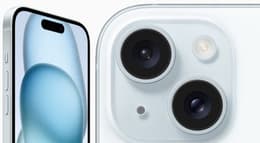
  • Main Camera System: The iPhone 15 features a dual-camera system with a 48MP Main camera and a 12MP Ultra Wide camera. It can capture super-high-resolution 24MP and 48MP photos and offers a 2x optical zoom option through its quad-pixel sensor. The iPhone 16 Plus also includes a 48MP Fusion wide-angle lens and an improved 12MP ultrawide lens, arranged vertically to enable spatial video capture.
  • Photography Features: The iPhone 15 benefits from features like Photonic Engine and Smart HDR 5 for improved image processing, especially in challenging lighting conditions. The iPhone 16 Plus enhances the ultrawide camera with a wider aperture and introduces support for Macro photography, allowing for detailed close-up shots.
  • Video Capabilities and User Interface: Both phones support 4K video recording up to 60 frames per second. The iPhone 16 Plus introduces a new dedicated Capture button, providing more intuitive control over camera functions, and its vertical camera arrangement enables spatial video recording for immersive viewing experiences.

Main camera

48 megapixels

48 megapixels

Front camera

12 megapixels

12 megapixels

Miscellaneous

Beyond core features, several practical elements differentiate these two iPhone models.

  • Connectivity Standards: Both the iPhone 15 and iPhone 16 Plus support 5G cellular connectivity and feature USB-C ports for charging and data transfer. However, the iPhone 16 Plus upgrades to Wi-Fi 7, offering potentially faster and more reliable wireless internet connections compared to the iPhone 15's Wi-Fi 6.
  • Physical Design and Controls: The iPhone 15 maintains a familiar design with a mute switch. The iPhone 16 Plus replaces the traditional mute switch with an Action button, first seen on the iPhone 15 Pro models, which is customizable for quick access to various functions. The iPhone 16 Plus also features a new Camera Control button for enhanced photography interaction.
  • Dimensions and Handling: The iPhone 15 is a more compact device, measuring 147.6 x 71.6 x 7.8 mm and weighing 171 grams. The iPhone 16 Plus is larger and heavier, at 160.9 x 77.8 x 7.8 mm and 199 grams, offering a more substantial feel and a larger screen but potentially requiring two-handed use for some.

Weight

171 oz

7030 oz

Screen size (inches)

6.1

6.7

Network

5G

5G

SIM card

eSIM

eSIM

Carrier compatibility

AT&T

Unlocked

Connector

USB-C (USB 2)

USB-C (USB 2)

User sentiment often highlights the iPhone 15 as a significant upgrade for those coming from older models, particularly praising its improved camera system and the integration of the Dynamic Island. Many users appreciate its balanced size and capable performance for everyday tasks. Criticisms sometimes point to the 60Hz display refresh rate as a feature that could be improved, especially when compared to other devices in its category.

The iPhone 16 Plus is frequently lauded for its exceptional battery life, often cited as a key differentiator that allows for extended usage without frequent recharging. Its larger display is also a common praise point for users who prioritize screen real estate for media and productivity. The enhanced camera features, including spatial video and the new Capture button, are also well-received. Some users, however, might find its larger size and weight less convenient for one-handed use.

Users prioritizing a more compact device with strong performance and a capable camera system will find the iPhone 15 well-suited to their needs. Those who value a larger display, significantly longer battery life, and the latest camera innovations, including spatial video capabilities, may lean toward the iPhone 16 Plus. Both devices offer a robust iOS experience, and for those seeking a sustainable choice, exploring quality-assured refurbished options for either model can provide an eco-friendly alternative.

See all articles

Our recent comparisons