Compare models
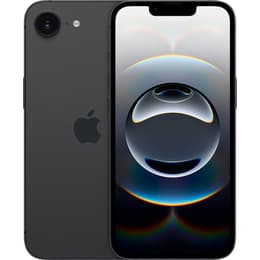
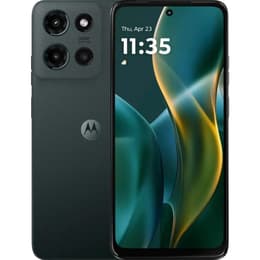
iPhone 16e • Unlocked vs Motorola Moto G (2025) • Unlocked
- 1-year warranty
- Free standard shipping
- Free 30-day returns
Differences at a glance
The Apple iPhone 16e (2025) and the Motorola Moto G (2025) are unlocked smartphones designed to serve different user preferences within the modern mobile landscape. Running on iOS and Android respectively, these devices approach everyday communication and media consumption through distinct design philosophies and operating systems.
While the iPhone 16e emphasizes compact construction and streamlined processing power, the Motorola Moto G (2025) centers its core experience around an expanded viewing area and expandable storage flexibility.
Available Models
Color
Storage (GB)
Scores
Durability
Both models debuted in early 2025, offering current software foundations, though their long-term update frameworks and expected operational lifespans follow different manufacturer trajectories.
- Software longevity: The iPhone 16e operates on iOS with multi-year system update support typical of Apple devices. The Motorola Moto G (2025) runs Android 15, receiving standard security patches and version upgrades suited to its product category.
- Build resilience: The iPhone 16e utilizes aluminum and glass construction paired with water resistance ratings. The Motorola Moto G (2025) features a durable composite build designed to withstand routine daily handling.
- Practical lifespan: Users can expect stable day-to-day operation from both phones over several years, with software optimization keeping basic apps functional throughout their lifecycle.
Release Year
2025
2025
OS
iOS
Android
Foldable
No
No
Performance
Processing capabilities and multitasking behaviors differ noticeably, driven by each device's internal hardware architecture and memory configuration.
- App responsiveness: The iPhone 16e handles intensive applications, rapid multitasking, and demanding games smoothly. The Motorola Moto G (2025) manages everyday tasks like web browsing, messaging, and media streaming reliably with standard multitasking loads.
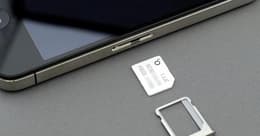
- Storage configurations: The iPhone 16e provides fixed internal storage tiers starting at 128GB. The Motorola Moto G (2025) offers smaller baseline storage paired with a dedicated microSD card slot for expandable file capacity.
- Battery endurance: The Motorola Moto G (2025) houses a large capacity battery designed to stretch across extended use periods. The iPhone 16e balances power efficiency to deliver reliable full-day operation under mixed usage conditions.
Screen quality
Display technologies vary significantly between the two models, impacting visual clarity, color reproduction, and outdoor visibility.
- Panel technology: The iPhone 16e features a vibrant OLED display delivering deep contrast levels and sharp detail. The Motorola Moto G (2025) utilizes a larger IPS LCD screen with a high refresh rate for smooth scrolling motion.
- Outdoor legibility: Peak brightness levels on the iPhone 16e maintain screen readability under direct sunlight. The Motorola Moto G (2025) offers a spacious canvas well-suited for reading documents and watching videos comfortably indoors.
- Resolution and clarity: The higher pixel density on the iPhone 16e results in finer text rendering, while the Moto G prioritizes screen real estate for immersive media viewing.
Resolution
2532x1170
720x1604
Screen type
Super Retina XDR
IPS LCD
Audiovisual
Optics and media playback hardware cater to varying photography habits and entertainment preferences.
- Camera capabilities: The iPhone 16e features a high-resolution primary lens supported by advanced computational photography for crisp everyday snapshots and low-light scenes. The Motorola Moto G (2025) includes a versatile main sensor accompanied by a macro lens for close-up framing.
- Video recording: Video capture on the iPhone 16e benefits from stable stabilization and smooth exposure transitions. The Motorola Moto G (2025) records standard definition video suitable for casual sharing.
- Audio output: The iPhone 16e delivers balanced stereo sound for media playback, whereas the Motorola Moto G (2025) includes both stereo speakers and a traditional 3.5mm headphone jack for wired audio accessories.
Miscellaneous
Physical dimensions and connectivity options shape how each device fits into travel routines and accessory ecosystems.
- Connectivity: Both phones support 5G connectivity, Wi-Fi networks, Bluetooth pairing, and near-field communication for digital transactions.
- Physical handling: The iPhone 16e features a compact, pocket-friendly form factor with a secure grip. The Motorola Moto G (2025) has a larger physical footprint that accommodates its expansive display.
- Security and ports: The iPhone 16e relies on facial recognition and a reversible charging port. The Motorola Moto G (2025) utilizes a responsive side-mounted fingerprint sensor for quick unlocking alongside standard physical connectors. Choosing a quality-assured refurbished option from Back Market provides a sustainable choice for acquiring either model while reducing electronic waste.
Weight
167 oz
7 oz
Screen size (inches)
6.1
6.7
Network
5G
5G
SIM card
eSIM
Physical SIM + eSIM
Carrier compatibility
Unlocked
Unlocked
What the community thinks
Community discussions and user feedback highlight distinct advantages for each smartphone. Users frequently praise the iPhone 16e for its smooth system fluidity, compact form factor, and reliable camera output. Conversely, owners of the Motorola Moto G (2025) often emphasize appreciation for its long battery longevity, expansive screen size, and the practical inclusion of expandable storage.
Users prioritizing compact handling, high-density display clarity, and robust processing power will find the iPhone 16e well-suited to their daily routine. Meanwhile, users prioritizing media viewing space, extended battery endurance, and expandable storage flexibility may lean toward the Motorola Moto G (2025).