Galaxy S10 • Unlocked vs iPhone 14 • Locked T-Mobile

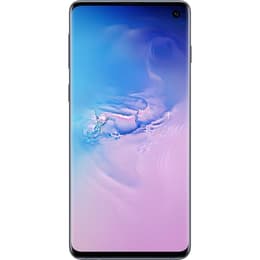
Galaxy S10 • Unlocked
Starting at

Refurbished price:$148.00

Versus $669.00 new

See options
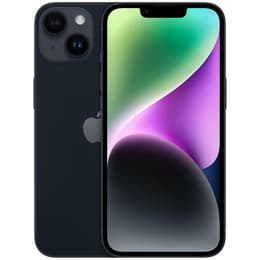
iPhone 14 • Locked T-Mobile
Starting at

Refurbished price:$269.00

Versus $599.00 new

See options

Ratings

The Samsung Galaxy S10, released in March 2019, and the iPhone 14, launched in September 2022, represent different generations of flagship smartphones. While both offer robust mobile experiences, the significant time difference between their releases means they cater to varying user expectations and priorities. The Galaxy S10 operates on the Android platform, offering a customizable experience, whereas the iPhone 14 runs on Apple's iOS, known for its integrated ecosystem and consistent performance. This comparison will explore their core differences, from longevity and performance to display and camera capabilities, to help users make an informed decision.

Scores

Durability

The longevity and repairability of a smartphone are key considerations for many users, and these two devices present distinct profiles.

  • Software Support: The Galaxy S10, being an older device, received three generations of Android software updates and four years of security updates from its release. The iPhone 14, as a more recent model, benefits from Apple's typically longer software support cycle, extending its practical usability for several more years.
  • Repairability: The Galaxy S10 received a repairability score of 3 out of 10 from iFixit, indicating a challenging repair process due to factors like a glued-down battery and a soldered charging port. In contrast, the iPhone 14 initially received a higher repairability score of 7 out of 10 due to internal redesigns that made components more accessible. However, this score was later downgraded to 4 out of 10 by iFixit due to software limitations and part-pairing requirements that complicate unauthorized repairs.
  • Physical Durability: Both devices feature an IP68 rating for water and dust resistance, offering protection against immersion. The iPhone 14 also incorporates a Ceramic Shield front cover, which is designed to offer enhanced drop performance.

Release Year

2019

2022

Last OS Compatibility

No

Yes

OS

Android

iOS

Foldable

No

No

Performance

Performance is a critical area where the generational gap between these two smartphones becomes evident, impacting everything from daily tasks to demanding applications.

  • Processing Power: The Galaxy S10 is powered by an octa-core processor, which, while capable at its release, offers performance suitable for everyday tasks, web browsing, and moderate app usage. The iPhone 14 features a more current-generation processor, providing a noticeable boost in speed and efficiency, resulting in smoother app loading, more fluid multitasking, and better handling of graphically intensive games and applications.
  • Memory and Storage: The Galaxy S10 typically comes with 8GB of RAM, with some variants offering 6GB or 12GB, and provides storage options of 128GB, 512GB, and a 1TB option for the S10+. It also supports expandable storage via a microSD card, allowing users to increase capacity by up to 512GB or 1TB depending on the card. The iPhone 14 includes 6GB of RAM and offers internal storage configurations of 128GB, 256GB, and 512GB, without the option for expandable storage.
  • Battery Behavior: The Galaxy S10 is equipped with a 3400 mAh battery, providing up to 18 hours of video playback or 14 hours of Wi-Fi browsing. The iPhone 14 has a 3279 mAh battery, but due to optimizations in its operating system and processor, it offers up to 20 hours of video playback and 75 hours of audio playback, often translating to a full day of use for many users.

Memory (GB)

8 GB

6 GB

Screen quality

The display is the primary interface for smartphone interaction, and both devices offer quality viewing experiences with distinct characteristics.

  • Display Technology and Clarity: The Galaxy S10 features a 6.1-inch Dynamic AMOLED display with a QHD+ resolution of 3040x1440 pixels, resulting in a pixel density of 551 ppi. This provides a sharp and vibrant image with deep blacks. The iPhone 14 also has a 6.1-inch Super Retina XDR OLED display, offering a resolution of 2532x1170 pixels at 460 ppi. It delivers excellent color accuracy and contrast.
  • Brightness and Outdoor Visibility: The iPhone 14's display can reach a typical brightness of 800 nits and a peak HDR brightness of 1200 nits, which contributes to good visibility in various lighting conditions, including bright outdoor environments. While the Galaxy S10's display is bright and clear, the iPhone 14 generally offers higher peak brightness for HDR content and outdoor use.
  • Refresh Rate: The Galaxy S10 features a standard 60Hz refresh rate. The iPhone 14 also maintains a 60Hz refresh rate, which provides a smooth experience for most content, though it does not offer the higher refresh rates found in some other modern smartphones.

Resolution

1440 x 3040

1170 x 2532

Screen type

Dynamic AMOLED

Super Retina XDR OLED

Audiovisual

Camera capabilities are a significant factor for many smartphone users, and both devices offer versatile systems, though with different strengths and advancements.

  • Rear Camera System: The Galaxy S10 is equipped with a triple-camera setup on the rear, including a 12-megapixel main sensor with a variable aperture (f/1.5-2.4), a 12-megapixel telephoto lens, and a 16-megapixel ultrawide lens. The iPhone 14 features a dual-camera system with a 12-megapixel main camera (f/1.5 aperture) with sensor-shift optical image stabilization and a 12-megapixel ultrawide camera.
  • Photography Performance: The iPhone 14 benefits from Apple's Photonic Engine, which enhances low-light performance across all cameras, capturing more detail and color in challenging conditions. Both phones are capable of capturing detailed photos in good lighting, but the iPhone 14 generally offers improved computational photography for better overall image quality, especially in low light.
  • Video Recording and Front Camera: The iPhone 14 supports 4K video recording with Dolby Vision HDR and introduces features like Cinematic Mode for depth-of-field effects and Action Mode for smoother handheld video. Its 12-megapixel front camera has a wider f/1.9 aperture and autofocus, leading to clearer selfies and video calls. The Galaxy S10 also offers capable video recording and a 10-megapixel front camera, with features like Super Steady video.

Main camera

12 megapixels

12 megapixels

Front camera

10 megapixels

12 megapixels

Miscellaneous

Beyond core specifications, several practical elements contribute to the overall user experience and differentiate these two devices.

  • Connectivity and Ports: The Galaxy S10 supports Wi-Fi 6 and Bluetooth 5.0, and notably includes a 3.5mm headphone jack and a USB-C port for charging and data transfer. The iPhone 14 supports 5G cellular connectivity, Wi-Fi 6, and Bluetooth 5.3, offering faster wireless speeds and more modern standards. It uses Apple's proprietary Lightning port and does not include a headphone jack.
  • Biometric Security and Safety Features: The Galaxy S10 features an ultrasonic in-display fingerprint sensor for secure unlocking. The iPhone 14 relies on Face ID, Apple's facial recognition system. Additionally, the iPhone 14 introduces advanced safety features such as Crash Detection, which can automatically alert emergency services after a severe car crash, and Emergency SOS via Satellite, allowing users to contact emergency services in areas without cellular or Wi-Fi coverage.
  • Design and Handling: The Galaxy S10 weighs 157 grams and has dimensions that make it comfortable for one-handed use. The iPhone 14 is slightly heavier at 172 grams, with a similar form factor. Both devices feature premium build materials, with the Galaxy S10 using glass and an aluminum frame, and the iPhone 14 featuring a Ceramic Shield front and glass back with an aluminum design.

Weight

6 oz

6 oz

Screen size (inches)

6.1

6.1

Network

LTE

5G

SIM card

Physical SIM

eSIM

Carrier compatibility

Unlocked

T-Mobile

Choosing between the Samsung Galaxy S10 and the iPhone 14 involves weighing the benefits of a more recent device against the enduring features of an older, yet still capable, smartphone. Users often praise the Galaxy S10 for its vibrant display, the inclusion of a headphone jack, and expandable storage, which offers flexibility for media enthusiasts and those who prefer physical connections. Some users, however, have noted its relatively shorter software support lifespan compared to newer models.

The iPhone 14 is frequently lauded for its powerful performance, advanced camera capabilities, and the seamless integration within the Apple ecosystem. Its new safety features, such as Crash Detection and Emergency SOS via Satellite, are also significant advantages for users prioritizing personal safety. Criticisms sometimes point to the lack of a headphone jack and expandable storage, which are common across modern iPhones.

Users prioritizing a more modern operating system, longer software support, and advanced camera and safety features will find the iPhone 14 well-suited to their needs. Its robust performance ensures it handles demanding applications and multitasking with ease. Conversely, users who value the flexibility of the Android ecosystem, the convenience of a traditional headphone jack, and the option for expandable storage may lean toward the Galaxy S10. Both devices, especially when considering quality-assured refurbished options, offer a pathway to a capable smartphone experience. Making an informed choice depends on aligning the device's strengths with individual usage patterns and preferences.

See all articles

Our recent comparisons