
Compare models
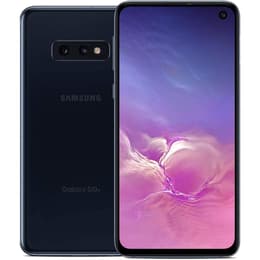
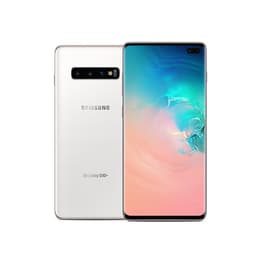
Galaxy S10E • Unlocked vs Galaxy S10+ • Unlocked
- 1-year warranty
- Free standard shipping
- Free 30-day returns
Differences at a glance
The Samsung Galaxy S10e and Galaxy S10 Plus, both released in March 2019, are smartphones from the same generation of Samsung's flagship line. While they share a common foundation in their operating system and core performance, they cater to different user preferences primarily through their physical size, display characteristics, and camera capabilities. The S10e offers a more compact experience, while the S10 Plus provides a larger screen and a more extensive camera system.
Available Models
Color
Storage (GB)
Scores
Durability
Both the Galaxy S10e and Galaxy S10 Plus launched with Android 9.0 Pie, and as part of Samsung's update policy for flagship devices, they received several major operating system upgrades. This means users can expect a similar duration of software support, typically extending for a few years beyond their release date, ensuring continued access to new features and security enhancements.
- Software Longevity: Both devices benefit from a comparable update cycle, offering a consistent experience in terms of software features and security patches for a similar timeframe.
- Physical Durability: The Galaxy S10e features Gorilla Glass 5 for screen protection, while the S10 Plus upgrades to Gorilla Glass 6 on the front and Gorilla Glass 5 on the back, offering slightly enhanced resistance to scratches and drops for the larger model.
- Water and Dust Resistance: Both models carry an IP68 rating, indicating robust protection against dust ingress and submersion in water, contributing to their practical lifespan in various environments.
Release Year
2019
2019
Last OS Compatibility
No
No
OS
Android
Android
Foldable
No
No
Performance
The internal components of both the Galaxy S10e and Galaxy S10 Plus are from the same generation, providing a strong foundation for daily tasks and demanding applications. This ensures a fluid user experience across both devices, though differences emerge in how they manage power and storage.
- Processing Power: Both phones are equipped with a capable processor that handles demanding applications, multitasking, and graphic-intensive games smoothly, offering a responsive experience for most users.
- Battery Behavior: The Galaxy S10e, with its 3100mAh battery, generally provides sufficient power for a full day of moderate use, though heavy usage may require more frequent charging. The Galaxy S10 Plus, housing a larger 4100mAh battery, typically offers extended endurance, often lasting a full day or more even with heavier use.
- Storage and Multitasking: The S10e is available with 6GB or 8GB of RAM and 128GB or 256GB of internal storage. The S10 Plus offers more expansive options, including 8GB or 12GB of RAM and storage configurations up to 1TB, which can be beneficial for users who store large files or run many applications simultaneously. Both support expandable storage via a microSD card.
Screen quality
Both the Galaxy S10e and Galaxy S10 Plus feature Dynamic AMOLED displays, known for their vibrant colors and deep blacks. However, they differ in size, resolution, and design, impacting the overall viewing experience.
- Display Technology and Clarity: Both devices utilize Dynamic AMOLED technology, delivering excellent contrast and color reproduction. The S10e features a 5.8-inch Full HD+ (2280x1080) flat display, offering clear visuals for everyday content. The S10 Plus boasts a larger 6.4-inch Quad HD+ (3040x1440) curved display, providing a sharper image with a higher pixel density, which can be noticeable for detailed content.
- Brightness and Outdoor Visibility: Both screens offer ample brightness, making them comfortable to view in various lighting conditions, including bright outdoor environments.
- Screen Size and Immersion: The S10e's smaller 5.8-inch flat screen provides a more compact form factor, ideal for one-handed use. The S10 Plus's larger 6.4-inch curved display offers a more expansive and immersive viewing experience, particularly for media consumption and gaming.
Resolution
1080 x 2280
1440 x 3040
Screen type
Dynamic AMOLED
Dynamic AMOLED
Audiovisual
The camera systems on the Galaxy S10e and S10 Plus share many core capabilities but diverge in their versatility and specialized features, particularly concerning telephoto and front-facing photography.
- Rear Camera System: The Galaxy S10e features a dual-camera setup on the rear, comprising a 12-megapixel wide-angle lens with a variable aperture and a 16-megapixel ultrawide lens. The Galaxy S10 Plus expands on this with a triple-camera system, adding a 12-megapixel telephoto lens with 2x optical zoom to the wide and ultrawide lenses, offering greater flexibility for capturing distant subjects.
- Photography Performance: Both devices deliver strong photo quality in well-lit conditions, producing vibrant and detailed images. The ultrawide lens on both models provides a broader perspective, useful for landscapes or group shots. The S10 Plus's telephoto lens allows for clearer zoomed-in shots without significant loss of detail. In lower light, both perform adequately, though the S10 Plus's overall system can sometimes capture more detail.
- Front Camera and Video: The S10e has a single 10-megapixel front camera. The S10 Plus features a dual front camera setup, including a 10-megapixel main sensor and a secondary depth sensor, which enhances portrait mode effects for selfies. Both phones are capable of recording video at up to 4K resolution at 60 frames per second, with good stabilization.
Main camera
12 megapixels
12 megapixels
Front camera
10 megapixels
10 megapixels
Miscellaneous
Beyond their core features, several practical elements differentiate the user experience between the Galaxy S10e and Galaxy S10 Plus, from physical design to connectivity options.
- Connectivity and Ports: Both devices offer modern connectivity options, including Wi-Fi 6 (802.11ax), Bluetooth 5.0, and NFC for contactless payments. They both retain a 3.5mm headphone jack and utilize a USB-C port for charging and data transfer.
- Biometric Security: The Galaxy S10e features a side-mounted fingerprint sensor integrated into the power button, which some users find intuitive and quick to access. The Galaxy S10 Plus incorporates an ultrasonic fingerprint sensor embedded directly within the display, offering a seamless and futuristic unlocking method.
- Design and Handling: The S10e is designed for users who prefer a more compact device, with dimensions of 142.2 x 69.9 x 7.9 mm and a weight of 150 grams, making it comfortable for one-handed operation. The S10 Plus is a larger device at 157.6 x 74.1 x 7.8 mm and 175 grams, providing a more expansive screen but requiring a two-handed grip for many tasks. Both feature premium build materials with glass backs and aluminum frames.
Weight
5 oz
6 oz
Screen size (inches)
5.8
6.4
Network
LTE
LTE
SIM card
Physical SIM
Physical SIM
Carrier compatibility
Unlocked
Unlocked
What the community thinks
User feedback for both the Galaxy S10e and S10 Plus generally highlights their strong performance and premium features for their time. The S10e is often praised for its compact size and flat screen, which many users prefer for ease of handling and a traditional display feel. Criticisms for the S10e frequently point to its battery life, which some heavy users find insufficient for a full day without a recharge.
The Galaxy S10 Plus, conversely, receives acclaim for its larger, immersive display and significantly longer battery life, making it a favorite for media consumption and extended use. Its more versatile camera system, including the telephoto lens and dual front cameras, is also a common point of praise. Some users, however, might find its larger size less convenient for one-handed operation.
Users prioritizing a compact form factor and a flat display for comfortable one-handed use may find the Galaxy S10e well-suited to their needs. Those who value a larger, more immersive screen, extended battery life, and a more comprehensive camera system, particularly for zoom photography and enhanced selfies, will likely lean towards the Galaxy S10 Plus. Both devices remain capable options, and considering a quality-assured refurbished option can be a sustainable choice for acquiring either model.