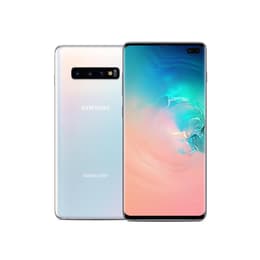
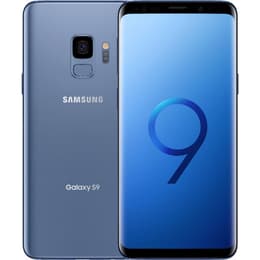

Galaxy S10+ • Unlocked vs Galaxy S9 • Unlocked

Galaxy S10+ • Unlocked
Starting at

Refurbished price:$165.00

Versus $719.00 new

See options
Galaxy S9 • Unlocked
Starting at

Refurbished price:$106.00

Versus $399.00 new

See options

Ratings

The Samsung Galaxy S10 Plus, released in March 2019, and the Samsung Galaxy S9, released in March 2018, are both Android smartphones from Samsung's flagship S series. While sharing a similar design philosophy, the S10 Plus introduced several advancements over its predecessor, including an updated camera system, a larger display, and enhanced internal specifications. Both devices run on the Android operating system, with the S10 Plus receiving longer official software support.

Scores

Durability

When considering the practical lifespan of these devices in 2026, their original release dates and subsequent software support are key factors. The Galaxy S10 Plus, being a year newer, benefits from a longer period of official updates.

  • Software Longevity: The Galaxy S10 Plus officially received Android updates up to Android 12 (One UI 4.1), with its last major update in December 2021. The Galaxy S9, on the other hand, concluded its official Android updates with Android 10 (One UI 2.5), rolled out in February 2020. This means the S10 Plus offers a more recent software experience and potentially longer compatibility with newer applications.
  • Repairability: Both devices present challenges for repair due to their glass sandwich designs and the extensive use of strong adhesive. The Galaxy S9 received a repairability score of 4 out of 10 from iFixit, while the Galaxy S10 Plus scored slightly lower at 3 out of 10, indicating that repairs, especially for components like the battery and screen, can be difficult and may require professional assistance.
  • Expected Practical Lifespan: Given their age and the cessation of major OS updates, both phones are past their prime for cutting-edge software features. However, the S10 Plus's more recent final Android version provides a slight edge in terms of continued app compatibility and security updates, extending its practical usability further into 2026 compared to the S9.

Release Year

2019

2018

Last OS Compatibility

No

No

OS

Android

Android

Foldable

No

No

Performance

The performance of these smartphones is largely dictated by their internal components, with the newer Galaxy S10 Plus offering a more robust experience for demanding tasks.

  • Processing Power: The Galaxy S10 Plus features a more advanced processor from its era, providing a noticeable improvement in speed and efficiency compared to the Galaxy S9's capable, but older, processor. This translates to quicker app loading times and smoother navigation through the operating system.
  • Multitasking and Storage: The S10 Plus typically comes with a higher amount of RAM, starting at 8GB compared to the S9's 4GB, which significantly enhances its ability to handle multiple applications simultaneously without slowdowns. Both devices offer various internal storage options, with the S10 Plus providing configurations up to 1TB, while the S9 goes up to 256GB, and both support expandable storage via microSD cards.
  • Battery Behavior: The Galaxy S10 Plus is equipped with a larger 4100 mAh battery, offering better endurance for a full day of moderate to heavy use compared to the Galaxy S9's 3000 mAh battery. Users of the S9 often reported that its battery required more frequent charging, especially with heavy usage.

Memory (GB)

8 GB

4 GB

Screen quality

Both devices feature high-quality AMOLED displays, but the Galaxy S10 Plus offers a larger and slightly more refined viewing experience.

  • Display Technology and Size: The Galaxy S10 Plus boasts a 6.4-inch Dynamic AMOLED display, while the Galaxy S9 features a 5.8-inch Super AMOLED display. Both technologies deliver vibrant colors and deep blacks, characteristic of AMOLED panels. The S10 Plus's larger screen provides a more expansive canvas for media consumption and productivity.
  • Resolution and Clarity: Both phones offer a Quad HD+ resolution (3040 x 1440 pixels for S10 Plus, 2960 x 1440 pixels for S9), resulting in sharp and clear visuals. The pixel density is high on both, ensuring text and images appear crisp.
  • Brightness and Refresh Rate: Both displays support HDR content, offering good brightness levels for outdoor visibility. They both feature a standard 60Hz refresh rate, which provides a smooth experience for everyday tasks, though not as fluid as higher refresh rate displays found in newer models.

Resolution

1440 x 3040

1440 x 2960

Screen type

Dynamic AMOLED

Super AMOLED

Audiovisual

The camera systems represent a significant area of differentiation, with the Galaxy S10 Plus offering greater versatility due to its multi-lens setup.

  • Rear Camera System: The Galaxy S10 Plus features a triple-camera array on the rear, including a 12 MP wide-angle lens with variable aperture, a 12 MP telephoto lens with 2x optical zoom, and a 16 MP ultrawide lens. This provides users with more photographic options, from expansive landscapes to zoomed-in shots. The Galaxy S9 has a single 12 MP wide-angle rear camera with a variable aperture, which was highly praised at its release for its low-light performance.
  • Front Camera and Video: The S10 Plus includes a dual front camera setup (10 MP main and 8 MP depth sensor), allowing for improved portrait mode selfies. The S9 has a single 8 MP front camera. Both devices are capable of recording high-quality video, with the S10 Plus offering 4K video recording at 60 frames per second and advanced stabilization features.
  • Audio Experience: Both phones feature stereo speakers tuned by AKG and retain the 3.5mm headphone jack, providing a good audio experience for media consumption. The S9 was noted for its improved audio quality with louder and clearer speakers.

Main camera

12 megapixels

12 megapixels

Front camera

10 megapixels

8 megapixels

Miscellaneous

Beyond the core features, several practical elements distinguish these two Galaxy models.

  • Connectivity and Ports: The Galaxy S10 Plus supports Wi-Fi 6, offering faster wireless speeds compared to the Galaxy S9's Wi-Fi 5. Both devices include USB-C ports for charging and data transfer, and notably, both retain the 3.5mm headphone jack, a feature less common in newer smartphones.
  • Biometric Security: The S10 Plus introduced an ultrasonic in-display fingerprint sensor, providing a modern and convenient unlocking method. The S9 features a rear-mounted fingerprint sensor and an iris scanner for biometric authentication.
  • Design and Build: The S10 Plus has a slightly thinner profile and is marginally lighter than the S9, despite its larger screen. Both phones feature a premium glass and aluminum construction, with the S10 Plus utilizing Gorilla Glass 6 on the front for enhanced durability compared to the S9's Gorilla Glass 5. Both are also IP68 rated for dust and water resistance.

Weight

6 oz

6 oz

Screen size (inches)

6.4

5.8

Network

LTE

LTE

SIM card

Physical SIM

Physical SIM

Carrier compatibility

Unlocked

Unlocked

User feedback for the Galaxy S10 Plus often highlights its impressive display, versatile camera system, and solid battery life as key strengths. Many appreciated the inclusion of features like the headphone jack and expandable storage, which were becoming less common. Criticisms sometimes pointed to the in-display fingerprint sensor's initial speed or the overall size for some users.

For the Galaxy S9, users frequently praised its excellent camera, particularly its low-light capabilities, and its premium design. However, a common concern was its battery life, which many found to be merely adequate for a full day of use. The software experience, while generally positive, could sometimes feel overwhelming to some users.

Users prioritizing a more modern software experience, a larger display, and a more versatile camera setup with an ultrawide lens may find the Galaxy S10 Plus better suited to their needs. Its stronger battery performance also makes it a more appealing choice for those who require longer usage between charges. Conversely, users who prefer a more compact device and still value a highly capable single main camera for everyday photography might lean towards the Galaxy S9. Its design, while older, still offers a premium feel.

For those considering either of these devices, exploring quality-assured refurbished options can provide an eco-friendly alternative, extending the life of these capable smartphones.


See all articles

Our recent comparisons