Galaxy S21 Ultra 5G • Unlocked vs Google Pixel 6a • Unlocked

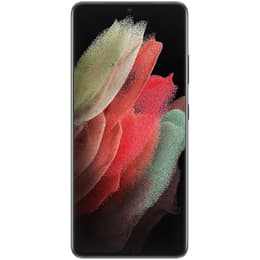
Galaxy S21 Ultra 5G • Unlocked
Starting at

Refurbished price:$257.00

Versus $1,199.99 new

See options
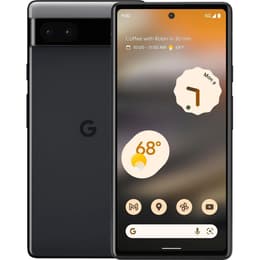
Google Pixel 6a • Unlocked
Starting at

Refurbished price:$141.00

Versus $399.00 new

See options

Ratings

The Samsung Galaxy S21 Ultra 5G, released in January 2021, and the Google Pixel 6A, launched in July 2022, represent different approaches to the smartphone experience. While both operate on the Android platform, the S21 Ultra 5G was positioned as a premium flagship device, offering advanced features and a larger form factor, whereas the Pixel 6A was designed as a more compact and accessible option, emphasizing core Google software and camera capabilities.

Scores

Durability

When considering the long-term usability of these devices, their release timelines and software support policies are key factors. The Galaxy S21 Ultra 5G, being an earlier release, has a shorter remaining official software support window compared to the Pixel 6A.

  • Software Longevity: The Samsung Galaxy S21 Ultra 5G received major Android updates until 2025 (Android 15) and security updates until early 2026. The Google Pixel 6A, released later, is expected to receive OS updates until at least July 2025 and security updates until at least July 2027. This means the Pixel 6A offers a longer period of guaranteed software and security support.
  • Repairability: The Galaxy S21 Ultra 5G has been noted as challenging to repair, partly due to the extensive use of adhesive for components like the battery and display, and its glass back panel. It received a repairability score of 3/10 by iFixit. In contrast, the Google Pixel 6A generally offers better repairability, with a score of 7/10, partly because its battery is easier to remove and the display uses clips in addition to adhesive.
  • Build Materials: The S21 Ultra 5G features a premium construction with Gorilla Glass Victus on both the front and back, and an aluminum frame, contributing to its durability but also its repair complexity. The Pixel 6A uses Gorilla Glass 3 for the front display and a plastic back, which can be more resilient to certain types of impact than glass.

Release Year

2021

2022

Last OS Compatibility

Yes

Yes

OS

Android

Android

Foldable

No

No

Performance

The performance of these two smartphones varies significantly, reflecting their different market segments and release dates. These differences impact how smoothly applications run, how quickly tasks are completed, and the overall responsiveness of the user experience.

  • Processing Power: The Galaxy S21 Ultra 5G is equipped with a high-end processor from its release year, providing robust performance for demanding applications, intensive multitasking, and graphic-heavy gaming. The Pixel 6A features Google's Tensor chip, which offers strong performance for its class, particularly excelling in AI and machine learning tasks, but may not match the raw computational power of the S21 Ultra 5G for all scenarios.
  • Multitasking and Storage: The S21 Ultra 5G typically comes with more RAM options (12GB or 16GB) and a wider range of storage configurations (up to 512GB), allowing for more applications to run simultaneously and greater storage capacity. The Pixel 6A comes with 6GB of RAM and 128GB of internal storage, which is suitable for most everyday users but offers less flexibility for heavy multitasking or extensive media libraries.
  • Battery Behavior: The Galaxy S21 Ultra 5G houses a larger 5000 mAh battery, designed to power its expansive, high-resolution display and powerful components, often lasting a full day of varied use. The Pixel 6A has a 4410 mAh battery, and while Google optimizes its software for efficiency, some users have reported that its battery life is good but not exceptional, especially with heavy usage.

Memory (GB)

12 GB

6 GB

Screen quality

The visual experience offered by these devices differs considerably, primarily due to their display technologies, resolutions, and refresh rates, impacting clarity, smoothness, and outdoor visibility.

  • Display Technology and Resolution: The Galaxy S21 Ultra 5G features a 6.8-inch Dynamic AMOLED 2X display with a high QHD+ resolution (3200 x 1440 pixels), providing exceptional sharpness and vibrant colors. The Pixel 6A has a smaller 6.1-inch OLED display with a Full HD+ resolution (2400 x 1080 pixels), which offers good clarity for its size but is less dense in pixels than the S21 Ultra 5G.
  • Refresh Rate and Brightness: The S21 Ultra 5G boasts an adaptive 120Hz refresh rate, resulting in very smooth scrolling and animations, along with a peak brightness of 1500 nits for excellent outdoor visibility. The Pixel 6A has a standard 60Hz refresh rate, which is less fluid, and a lower peak brightness of around 800 nits, making it less ideal for bright outdoor conditions compared to the S21 Ultra 5G.
  • Viewing Experience: The larger, higher-resolution, and higher refresh rate screen of the S21 Ultra 5G provides a more immersive and premium viewing experience, particularly for media consumption and gaming. The Pixel 6A's smaller screen and 60Hz refresh rate offer a more compact and functional viewing experience, suitable for everyday tasks.

Resolution

1440 x 3200

1080 x 2400

Screen type

Dynamic AMOLED 2X

OLED

Audiovisual

Both smartphones offer capable camera systems, but they approach photography with different hardware and software philosophies, leading to distinct results in various shooting conditions.

  • Rear Camera System: The Galaxy S21 Ultra 5G features a versatile quad-camera setup, including a 108MP main sensor, a 12MP ultrawide, and two 10MP telephoto lenses (3x and 10x optical zoom), allowing for significant zoom capabilities and detailed shots. The Pixel 6A uses a dual-camera system with a 12.2MP main sensor and a 12MP ultrawide lens, relying heavily on Google's computational photography for image quality.
  • Photography Performance: The S21 Ultra 5G excels in capturing highly detailed images, especially with its advanced zoom features, and performs well in various lighting conditions. The Pixel 6A is praised for its consistent image processing, producing natural colors and strong dynamic range, particularly in everyday and low-light scenarios, despite having older camera hardware.
  • Video and Audio: The S21 Ultra 5G supports video recording up to 8K resolution at 24fps and 4K at 60fps, offering advanced video features. The Pixel 6A records video up to 4K at 60fps. Both devices offer good microphone quality for calls and recording, and stereo speakers for media consumption, though the S21 Ultra 5G's audio output is generally considered more robust.

Main camera

108 megapixels

12.2 megapixels

Front camera

40 megapixels

8 megapixels

Miscellaneous

Beyond the core features, several practical elements differentiate these two devices, influencing daily usability, connectivity, and overall handling.

  • Connectivity and Ports: Both devices support 5G and Wi-Fi 6E, ensuring fast wireless connectivity. Both also feature a USB-C port for charging and data transfer. The S21 Ultra 5G also supports S Pen functionality, though the stylus is sold separately.
  • Biometric Security: Both phones utilize under-display fingerprint sensors for secure unlocking. The S21 Ultra 5G also offers face recognition.
  • Physical Characteristics: The Galaxy S21 Ultra 5G is a larger and heavier device, weighing 227g with dimensions of 165.1 x 75.6 x 8.9 mm, which can impact one-handed use. The Pixel 6A is more compact and lighter at 178g, with dimensions of 152.2 x 71.8 x 8.9 mm, making it easier to handle for users who prefer smaller phones. The S21 Ultra 5G has an IP68 rating for dust and water resistance, while the Pixel 6A has an IP67 rating.

Weight

8 oz

6 oz

Screen size (inches)

6.8

6.1

Network

5G

5G

SIM card

Physical SIM + eSIM

Physical SIM + eSIM

Carrier compatibility

Unlocked

Unlocked

The Samsung Galaxy S21 Ultra 5G and the Google Pixel 6A cater to different user priorities, reflecting their distinct design philosophies and target markets. The S21 Ultra 5G is often praised for its expansive, high-quality display, versatile camera system with advanced zoom capabilities, and premium build. Users frequently highlight its strong performance for demanding tasks and its comprehensive feature set. Some common criticisms include its larger size and weight, which can make one-handed use challenging, and its lower repairability score. The Pixel 6A, on the other hand, receives commendation for its excellent computational photography, consistent software experience, and more compact form factor. Users appreciate its reliable performance for everyday use and its longer software support timeline. Criticisms sometimes point to its standard 60Hz display and battery life that, while good, may not always last heavy users a full day without a top-up.

Users prioritizing a large, vibrant display, advanced camera zoom, and overall premium hardware for media consumption and power-intensive applications may find the Galaxy S21 Ultra 5G more aligned with their needs. Conversely, individuals who value a more compact device, a streamlined Android experience with timely updates, and exceptional point-and-shoot photography, particularly for its class, may lean towards the Google Pixel 6A. Both devices offer compelling features, and choosing between them depends on which aspects are most important for your daily usage. For those looking for an eco-friendly alternative, both models are available as quality-assured refurbished options, providing a sustainable choice for consumers.
See all articles

Our recent comparisons