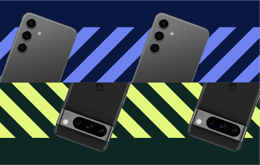
Galaxy S24+ • Unlocked vs Google Pixel 6a • Unlocked

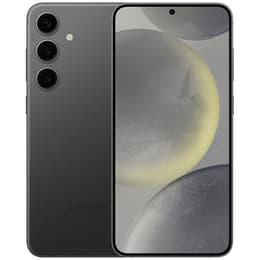
Galaxy S24+ • Unlocked
Starting at

Refurbished price:$408.00

Versus $814.00 new

See options
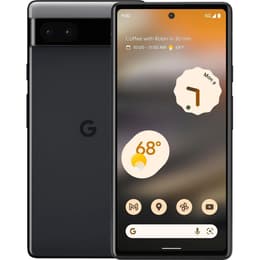
Google Pixel 6a • Unlocked
Starting at

Refurbished price:$141.00

Versus $399.00 new

See options

Ratings

The Samsung Galaxy S24 Plus, released in early 2024, and the Google Pixel 6a, launched in mid-2022, represent distinct approaches to the smartphone experience. While both operate on the Android platform, the Galaxy S24 Plus is positioned as a premium device with advanced features and a larger form factor, whereas the Pixel 6a offers a more compact design and focuses on delivering core Google experiences. The primary differentiators lie in their release timelines, display technology, and overall performance capabilities.

Scores

Durability

The expected lifespan of a smartphone is influenced by its release date and the manufacturer's commitment to software updates and repairability.

  • Release Timeline: The Samsung Galaxy S24 Plus was released in January 2024, making it a more recent device. The Google Pixel 6a, launched in July 2022, is an older model.
  • Software Longevity: The Galaxy S24 Plus is expected to receive seven years of OS and security updates, offering extended software support. The Pixel 6a was initially promised three years of OS updates and five years of security updates, with OS updates guaranteed until at least July 2025 and security updates until at least July 2027. Some reports suggest an extension for the Pixel 6a's OS updates.
  • Durability Features: The Galaxy S24 Plus features an Armor Aluminum frame and Corning Gorilla Glass Victus 2 on both the front and back, along with an IP68 rating for dust and water resistance. The Pixel 6a has a plastic back, an aluminum frame, and Corning Gorilla Glass 3 for screen protection, with an IP67 rating for dust and water resistance.

Release Year

2024

2022

Last OS Compatibility

Yes

Yes

OS

Android

Android

Foldable

No

No

Performance

Performance is a key area where these two devices show notable differences, impacting how smoothly they handle daily tasks and demanding applications.

  • Processing Power: The Galaxy S24 Plus is equipped with a current-generation processor, either the Snapdragon 8 Gen 3 or the Exynos 2400, depending on the region. This hardware enables very smooth operation, quick app loading, and efficient handling of intensive gaming and multitasking. The Pixel 6a utilizes Google's Tensor chip, which, at its release, provided strong performance for everyday use and advanced computational tasks, though it is an older generation compared to the S24 Plus.
  • Multitasking and Storage: The Galaxy S24 Plus comes with 12GB of RAM and offers storage options of 256GB or 512GB, providing ample capacity for numerous applications running simultaneously and extensive media storage. The Pixel 6a features 6GB of RAM and 128GB of non-expandable internal storage, which is suitable for typical daily usage but may be more limiting for heavy multitaskers or those with large media libraries.
  • Battery Behavior: The Galaxy S24 Plus houses a 4900 mAh battery, and users frequently report it lasting through a full day of heavy use, with some achieving two days on a single charge. The Pixel 6a has a 4410 mAh battery, generally offering over 24 hours of use, with an Extreme Battery Saver mode extending this significantly. Some initial user reports of overheating were addressed through software updates.

Memory (GB)

12 GB

6 GB

Screen quality

The visual experience is largely defined by the display, and both devices offer distinct screen technologies and specifications.

  • Display Technology and Clarity: The Galaxy S24 Plus features a 6.7-inch Dynamic AMOLED 2X display with a resolution of 3120 x 1440 pixels, resulting in a very sharp and detailed image. The Pixel 6a comes with a 6.1-inch OLED display with a 1080 x 2400 pixel resolution, providing vibrant colors and deep blacks.
  • Brightness and Smoothness: The Galaxy S24 Plus offers a high peak brightness of 2600 nits, making it highly visible even in bright outdoor conditions, and features a 120Hz LTPO adaptive refresh rate for exceptionally smooth scrolling and responsive interactions. The Pixel 6a's display has a standard 60Hz refresh rate, which provides a smooth experience for most content but lacks the fluidity of higher refresh rate screens. It also supports HDR for enhanced contrast in compatible content.
  • Screen Protection: The Galaxy S24 Plus is protected by Corning Gorilla Glass Victus 2, offering enhanced resistance against drops and scratches. The Pixel 6a uses Corning Gorilla Glass 3 for its display protection.

Resolution

1440 x 3120

1080 x 2400

Screen type

Dynamic LTPO AMOLED 2X

OLED

Audiovisual

Both smartphones offer capable camera systems, though they differ in their hardware configurations and photographic strengths.

  • Rear Camera System: The Galaxy S24 Plus features a versatile triple-camera setup on the rear, including a 50 MP wide sensor, a 10 MP telephoto lens with 3x optical zoom, and a 12 MP ultrawide sensor. This configuration allows for a range of photographic styles, from expansive landscapes to detailed zoomed-in shots. The Pixel 6a employs a dual-camera system with a 12.2 MP main sensor (with optical image stabilization and dual pixel autofocus) and a 12 MP ultrawide sensor. It does not include a dedicated telephoto lens.
  • Photography Performance: The Galaxy S24 Plus delivers strong everyday photography, with its telephoto lens providing clear zoomed images. The Pixel 6a is highly regarded for its computational photography, producing images with good detail, accurate exposure, and natural colors, even in challenging lighting conditions thanks to features like Night Sight.
  • Video and Audio: Both devices are capable of recording 4K video, with the Pixel 6a supporting up to 4K at 60 frames per second. The Galaxy S24 Plus also offers robust video capabilities. For audio, both provide stereo speakers, and the Pixel 6a is noted for clear audio capture in videos.

Main camera

50 megapixels

12.2 megapixels

Front camera

12 megapixels

8 megapixels

Miscellaneous

Beyond the core components, several practical features and design elements contribute to the overall user experience.

  • Connectivity and Ports: The Galaxy S24 Plus supports 5G, Wi-Fi 6E (with some models supporting Wi-Fi 7), and Bluetooth 5.3, along with a USB-C 3.2 port. It also includes Ultra-Wideband (UWB) for enhanced spatial awareness. The Pixel 6a offers 5G connectivity, Wi-Fi 6/6E, Bluetooth 5.2, and a USB-C port.
  • Biometrics and Sensors: Both phones feature in-display fingerprint sensors for secure unlocking. The Galaxy S24 Plus includes a comprehensive suite of sensors, such as an accelerometer, barometer, gyroscope, and geomagnetic sensor. The Pixel 6a also incorporates standard sensors like an accelerometer, gyroscope, and ambient light sensor.
  • Physical Design: The Galaxy S24 Plus measures 158.5 x 75.9 x 7.7 mm and weighs 196 grams, featuring a flat frame and a premium glass and aluminum construction. The Pixel 6a is more compact at 152.2 x 71.8 x 8.9 mm and weighs 178 grams, with a design that includes a plastic back and an aluminum frame.

Weight

7 oz

6 oz

Screen size (inches)

6.7

6.1

Network

5G

5G

SIM card

Physical SIM + eSIM

Physical SIM + eSIM

Carrier compatibility

Unlocked

Unlocked

The Samsung Galaxy S24 Plus and Google Pixel 6a cater to different user needs, reflecting their respective positions in the smartphone market. User sentiment for the Galaxy S24 Plus frequently praises its impressive battery life, vibrant and bright display, and the promise of extended software support. Its powerful performance is also a consistent highlight, making it well-suited for demanding applications and multitasking. Some users note that while the camera system is capable, its performance might not always stand out against its premium positioning. The Pixel 6a, on the other hand, is widely lauded for its exceptional camera performance, particularly its computational photography capabilities that deliver consistent and high-quality images. Its compact size and overall system responsiveness are also frequently appreciated. Criticisms often point to its 60Hz display, which can feel less fluid compared to devices with higher refresh rates, and some initial battery concerns that were later addressed by software updates.

Users prioritizing a large, high-resolution, and exceptionally bright display with the smoothest scrolling experience, coupled with top-tier performance and extensive software longevity, may find the Samsung Galaxy S24 Plus to be a strong fit. Its robust battery life also makes it suitable for those who require extended usage between charges. Conversely, users who value a more compact device, prioritize outstanding photographic capabilities driven by advanced software, and appreciate a clean Android experience will likely lean towards the Google Pixel 6a. It remains a compelling option for those seeking a quality device with a focus on camera and core Google features. Both devices, whether new or as a quality-assured refurbished option, offer distinct advantages depending on individual preferences and usage patterns.


See all articles

Our recent comparisons