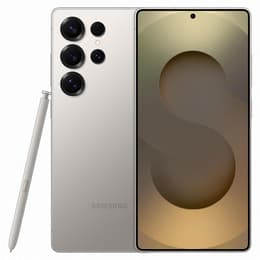
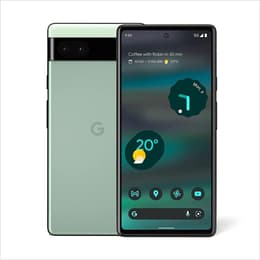
Galaxy S25 Ultra • Unlocked vs Google Pixel 6a • Unlocked

Galaxy S25 Ultra • Unlocked
Starting at

Refurbished price:$749.99

Versus $1,299.00 new

See options
Google Pixel 6a • Unlocked
Starting at

Refurbished price:$141.00

Versus $399.00 new

See options

Ratings

The Samsung Galaxy S25 Ultra, a flagship smartphone released in early 2025, and the Google Pixel 6A, a mid-range device launched in mid-2022, represent distinct approaches to the smartphone experience. While both operate on the Android platform, they cater to different user expectations through their hardware capabilities and feature sets. The primary differentiators lie in their processing power, camera systems, display technology, and overall build quality, reflecting their respective market positions and release timelines.

Scores

Durability

When considering the longevity of these devices, several factors come into play, including their release dates, software support, and physical durability.

  • Release Timeline: The Galaxy S25 Ultra was released in February 2025, making it a current-generation device. In contrast, the Pixel 6A launched in July 2022, positioning it as an older model in the smartphone market.
  • Software Support: The Galaxy S25 Ultra is guaranteed to receive seven years of Android OS upgrades and security updates, with support extending until 2032. The Pixel 6A, however, is expected to receive OS updates until at least July 2025 and security updates until at least July 2027. This means the Galaxy S25 Ultra offers a significantly longer period of official software support.
  • Physical Durability: The Galaxy S25 Ultra features a robust build with a titanium frame and Corning Gorilla Armor 2 on both the front and back, contributing to its IP68 dust and water resistance. The Pixel 6A utilizes a Gorilla Glass 3 front, a plastic back, and an aluminum frame, with an IP67 rating for dust and water resistance. The Galaxy S25 Ultra's materials offer enhanced protection against drops and scratches.
  • Repairability: The Galaxy S25 Ultra received an iFixit repairability score of 5 out of 10, noted for easier battery swaps and modular camera design, though screen removal can be challenging. The Pixel 6A scored 7 out of 10 in repairability, with its battery being relatively easy to remove and the display attached with clips, though the USB-C port is soldered to the mainboard.

Release Year

2025

2022

Last OS Compatibility

Yes

Yes

OS

Android

Android

Foldable

No

No

Performance

Performance is a key area where these two devices exhibit notable differences, impacting everything from app responsiveness to demanding tasks.

  • Processor Capabilities: The Galaxy S25 Ultra is powered by a current-generation processor, designed to handle intensive applications and multitasking with efficiency. The Pixel 6A features an older generation processor, which provides capable performance for everyday use but may show limitations with more demanding applications or extensive multitasking.
  • System Responsiveness and Multitasking: With its advanced processor and 12GB of RAM (with 16GB options in some configurations), the Galaxy S25 Ultra offers smooth system responsiveness and efficient multitasking, allowing users to switch between numerous applications without slowdowns. The Pixel 6A comes with 6GB of RAM, which is sufficient for typical daily tasks and moderate multitasking, but may experience more noticeable pauses when managing many active applications simultaneously.
  • Storage Options and Speed: The Galaxy S25 Ultra offers various storage configurations up to 1TB, utilizing UFS 4.0 technology for faster data read and write speeds. The Pixel 6A is available with 128GB of internal storage, which is non-expandable, and uses UFS 3.1 technology. This difference in storage technology and capacity affects app loading times and file transfer speeds.
  • Battery Behavior: The Galaxy S25 Ultra is equipped with a 5000 mAh battery, supporting 45W wired fast charging and wireless charging, designed to provide extended usage for power users. The Pixel 6A has a 4410 mAh battery with 18W fast charging, offering reliable battery life for average daily use.

Memory (GB)

12 GB

6 GB

Screen quality

The visual experience on a smartphone is largely defined by its display, and here the two devices present different characteristics.

  • Display Technology and Resolution: The Galaxy S25 Ultra features a 6.9-inch Dynamic LTPO AMOLED 2X display with a resolution of 1440 x 3120 pixels, offering a high pixel density for sharp and detailed visuals. The Pixel 6A has a 6.1-inch OLED display with a resolution of 1080 x 2400 pixels, providing clear images suitable for its size.
  • Refresh Rate and Smoothness: The Galaxy S25 Ultra boasts a 120Hz refresh rate, which contributes to smoother scrolling, more fluid animations, and a more responsive feel during interactions and gaming. The Pixel 6A features a standard 60Hz refresh rate, which is adequate for most content but may not offer the same level of visual fluidity as a higher refresh rate display.
  • Brightness and Outdoor Visibility: The Galaxy S25 Ultra's display can reach a peak brightness of 2600 nits, ensuring excellent visibility even in bright outdoor conditions. The Pixel 6A's OLED display offers good brightness for indoor and typical outdoor use, though it may not perform as well under direct sunlight compared to the S25 Ultra.
  • Color and Clarity: Both devices utilize OLED technology, known for deep blacks and vibrant colors. The Galaxy S25 Ultra's display supports HDR10+ and incorporates ProScaler AI upscaling for enhanced content quality at QHD+ resolution. While the Pixel 6A also supports HDR, the S25 Ultra's advanced display technologies aim for a more refined visual experience.

Resolution

1440x3120

1080 x 2400

Screen type

Dynamic LTPO AMOLED 2X

OLED

Audiovisual

The camera systems on both smartphones offer distinct capabilities for capturing photos and videos, catering to different photography needs.

  • Rear Camera System: The Galaxy S25 Ultra features a versatile quad-camera setup, including a 200 MP wide-angle main sensor, a 50 MP ultrawide camera, a 10 MP telephoto lens with 3x optical zoom, and a 50 MP periscope telephoto lens with 5x optical zoom. This configuration provides extensive flexibility for various photographic scenarios. The Pixel 6A comes with a dual-camera system, comprising a 12.2 MP wide-angle main sensor and a 12 MP ultrawide sensor.
  • Photography Performance: The Galaxy S25 Ultra's high-resolution sensors and multiple focal lengths allow for detailed images across a wide range of conditions, including advanced zoom capabilities. Its larger sensors and image processing contribute to strong low-light performance. The Pixel 6A leverages its computational photography strengths to produce clear and well-exposed images, particularly in everyday lighting, with its main sensor offering optical image stabilization.
  • Video Recording Capabilities: The Galaxy S25 Ultra supports video recording up to 8K resolution at 24/30fps and 4K at up to 120fps, offering advanced options for high-quality video content creation. The Pixel 6A can record 4K video at 30 or 60fps, providing solid video capabilities for general use.
  • Front Camera and Audio: For selfies and video calls, the Galaxy S25 Ultra is equipped with a 12 MP front camera. The Pixel 6A features an 8 MP front camera. Both devices include stereo speakers for media consumption, but neither has a 3.5mm headphone jack.

Miscellaneous

Beyond core performance and display, several practical elements contribute to the overall user experience and device utility.

  • Connectivity Options: The Galaxy S25 Ultra supports the latest connectivity standards, including 5G, Wi-Fi 7, and Bluetooth 5.4, along with Ultra-Wideband (UWB) and satellite connectivity for emergency situations. The Pixel 6A offers 5G, Wi-Fi 6/6E, and Bluetooth 5.2. The S25 Ultra's newer standards provide faster speeds and more robust connections.
  • Port Types and Sensors: Both devices feature a USB Type-C port for charging and data transfer. The Galaxy S25 Ultra's USB-C 3.2 port also supports DisplayPort 1.2 and OTG. The Pixel 6A uses USB-C 3.1. For security, the Galaxy S25 Ultra includes an ultrasonic in-screen fingerprint sensor, while the Pixel 6A also has an under-display fingerprint sensor.
  • Physical Characteristics: The Galaxy S25 Ultra measures 162.8 x 77.6 x 8.2 mm and weighs 218 g, offering a large form factor. The Pixel 6A is more compact at 152.2 x 71.8 x 8.7 mm and lighter at 178 g, making it easier for one-handed use. The S25 Ultra also integrates an S Pen stylus for enhanced productivity and creative tasks.
  • Build Materials: The Galaxy S25 Ultra features a premium construction with a titanium frame and Gorilla Armor 2 glass, providing a durable and high-end feel. The Pixel 6A uses an aluminum frame with a plastic back and Gorilla Glass 3 on the front, offering a solid but less premium construction.

Weight

8 oz

6 oz

Screen size (inches)

6.9

6.1

Network

5G

5G

SIM card

Physical SIM + eSIM

Physical SIM + eSIM

Carrier compatibility

Unlocked

Unlocked

The Samsung Galaxy S25 Ultra and Google Pixel 6A cater to different segments of the smartphone market, with user feedback often highlighting their respective strengths. Users frequently praise the Galaxy S25 Ultra for its expansive and vibrant display, powerful camera system with versatile zoom capabilities, and robust performance for demanding applications and multitasking. Its long software support and premium build materials are also commonly cited as significant advantages. Some discussions, however, note the device's larger size and weight, which might not appeal to all users, and some technical discussions around its display panel characteristics.

The Google Pixel 6A, on the other hand, is often commended for its balanced performance for everyday tasks, reliable camera quality driven by Google's computational photography, and its more compact and manageable form factor. Its repairability score has also been noted as a positive aspect. Common observations from users sometimes point to its 60Hz display as a less fluid experience compared to higher refresh rate screens, and its more limited storage options.

Users prioritizing a cutting-edge smartphone experience with a large, high-refresh-rate display, advanced camera features, and top-tier performance for gaming and productivity may find the Samsung Galaxy S25 Ultra well-suited to their needs. Its extended software support also makes it a compelling choice for those seeking long-term device longevity. Conversely, users who value a more compact device, consistent everyday performance, and a capable camera system without the need for the absolute latest specifications might lean towards the Google Pixel 6A. Both devices, whether new or as a quality-assured refurbished option, offer distinct advantages depending on individual priorities, enabling informed and sustainable choices.

See all articles

Our recent comparisons