
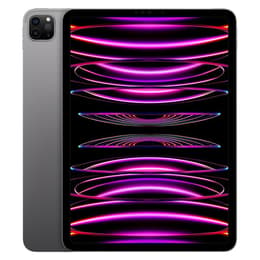

Galaxy Tab A7 Lite (8.7", 2021) vs iPad Pro (2022, M2 series)

Galaxy Tab A7 Lite (8.7", 2021)
Starting at

Refurbished price:$71.00

Versus $219.00 new

See options
iPad Pro (2022, M2 series)
Starting at

Refurbished price:$547.00

Versus $799.00 new

See options

Ratings

The Samsung Galaxy Tab A7 Lite, released in 2021, and the Apple iPad Pro M2 Series, launched in 2022, represent distinct approaches to tablet computing. While both are portable devices designed for on-the-go use, they cater to different user needs and expectations. The Galaxy Tab A7 Lite operates on Android, offering a compact and accessible experience, whereas the iPad Pro M2 Series runs on iPadOS, providing a powerful platform for demanding tasks and creative professionals.

Scores

Durability

The longevity of a tablet is significantly influenced by its release timeline and the manufacturer's commitment to software updates.

  • Release Timeline: The Galaxy Tab A7 Lite was released in June 2021, making it an older model compared to the iPad Pro M2 Series, which debuted in October 2022. This difference in release year directly impacts the remaining period of software support.
  • Software Support: Samsung typically provides several years of Android updates for its tablets, with the Tab A7 Lite expected to receive updates up to Android 14 with One UI 6.1, extending its software lifespan. Apple, known for its extended software support, generally offers 5-6 years of iPadOS updates for its devices, meaning the iPad Pro M2 Series will likely receive major operating system updates for a longer duration than the Tab A7 Lite.
  • Physical Durability: Both tablets feature robust builds, with the Galaxy Tab A7 Lite incorporating an aluminum back and frame, and the iPad Pro M2 Series utilizing an aluminum unibody design. However, the iPad Pro models often include more advanced display protection. The practical lifespan for both devices can be extended through careful handling and the use of protective accessories.

Release Year

2021

2022

Last OS Compatibility

Yes

Yes

OS

Android

iPadOS

Performance

Performance is a key differentiator, with each tablet designed to handle varying levels of computational demand.

  • Processing Capabilities: The Galaxy Tab A7 Lite is equipped with an octa-core processor designed for everyday tasks such as web browsing, video playback, and light applications. Users may experience some slowdown when running multiple applications simultaneously or engaging in more demanding games. In contrast, the iPad Pro M2 Series features a highly capable processor, delivering substantial power for intensive applications, complex multitasking, and professional creative workflows.
  • System Responsiveness: The Galaxy Tab A7 Lite, with its 3GB or 4GB of RAM, offers acceptable responsiveness for its intended use, but it is not built for high-speed transitions between numerous heavy applications. The iPad Pro M2 Series, available with 8GB or 16GB of RAM, provides a fluid and immediate response across all operations, ensuring smooth performance even with resource-intensive software.
  • Storage Options: The Galaxy Tab A7 Lite comes with 32GB or 64GB of internal storage, which can be expanded significantly via a microSD card, offering flexibility for media and document storage. The iPad Pro M2 Series offers a wide range of storage configurations, from 128GB up to 2TB, catering to users who require substantial internal storage for large files, projects, and applications without external expansion.

Memory (GB)

3 GB

8 GB

Screen quality

The visual experience varies significantly between these two tablets, primarily due to differences in display technology and resolution.

  • Display Technology and Resolution: The Galaxy Tab A7 Lite features an 8.7-inch TFT LCD display with a resolution of 1340 x 800 pixels. This screen is suitable for casual media consumption and reading, offering adequate clarity for general use. The iPad Pro M2 Series offers two sizes: an 11-inch Liquid Retina IPS LCD and a 12.9-inch Liquid Retina XDR mini-LED LCD. Both boast significantly higher resolutions (2388 x 1668 pixels for the 11-inch and 2732 x 2048 pixels for the 12.9-inch), providing sharper images and more detailed text.
  • Brightness and Color: The Galaxy Tab A7 Lite's display offers sufficient brightness for indoor use, though it may struggle in bright outdoor conditions. The iPad Pro M2 Series displays offer superior brightness, with the 11-inch model reaching up to 600 nits and the 12.9-inch Liquid Retina XDR display achieving up to 1000 nits sustained brightness and 1600 nits peak brightness for HDR content, ensuring excellent visibility in various lighting environments and vibrant color reproduction.
  • Refresh Rate and Smoothness: The Galaxy Tab A7 Lite features a standard refresh rate, providing a consistent viewing experience. The iPad Pro M2 Series, however, includes ProMotion technology, offering an adaptive refresh rate up to 120Hz. This results in noticeably smoother scrolling, more fluid animations, and a more responsive touch experience, particularly beneficial for creative tasks and fast-paced content.

Resolution

800 x 1340

2388 x 1668

Screen type

TFT LCD

Liquid Retina XDR

Pixel density

180ppp

264ppp

Audiovisual

The camera and audio capabilities reflect the primary use cases for each device, ranging from basic functionality to advanced creative tools.

  • Camera System: The Galaxy Tab A7 Lite is equipped with an 8-megapixel rear camera and a 2-megapixel front-facing camera. These cameras are functional for video calls, scanning documents, and occasional snapshots, but they are not designed for high-quality photography. The iPad Pro M2 Series features a more advanced camera setup, including a 12-megapixel Wide and 10-megapixel Ultra Wide camera on the rear, complemented by a LiDAR scanner for enhanced depth sensing. The front-facing 12-megapixel Ultra Wide camera supports Center Stage, which keeps users in frame during video calls.
  • Photography and Video Quality: While the Galaxy Tab A7 Lite can record 1080p video, the quality is generally suitable for casual use, with users noting potential shakiness and muted colors. The iPad Pro M2 Series is capable of recording 4K video and supports ProRes video capture, offering significantly higher detail and dynamic range, making it suitable for more professional video work. However, user feedback suggests that while the iPad Pro's camera is good for a tablet, it may not match the image quality of current flagship smartphones.
  • Audio Experience: The Galaxy Tab A7 Lite includes dual stereo speakers with Dolby Atmos support, providing a decent audio experience for media consumption. The iPad Pro M2 Series features a four-speaker audio system, delivering a richer and more immersive sound profile, which enhances both media consumption and professional audio monitoring.

Miscellaneous

Beyond core performance and display, several practical features contribute to the overall user experience of these tablets.

  • Connectivity: The Galaxy Tab A7 Lite supports Wi-Fi 5 (802.11 a/b/g/n/ac) and Bluetooth 5.0, with an optional LTE model for mobile data connectivity. The iPad Pro M2 Series offers more advanced connectivity with Wi-Fi 6E, providing faster wireless speeds, and Bluetooth 5.3. Its cellular models support 5G, including both sub-6GHz and mmWave technologies, for broader and faster mobile network access.
  • Ports and Biometrics: The Galaxy Tab A7 Lite includes a USB-C 2.0 port and retains a 3.5mm headphone jack, offering traditional audio connectivity. The iPad Pro M2 Series features a Thunderbolt/USB 4 port, which provides significantly faster data transfer speeds and broader peripheral compatibility, but it omits the 3.5mm headphone jack. For security, the iPad Pro M2 Series utilizes Face ID for secure authentication, while the Tab A7 Lite relies on traditional PIN/pattern security.
  • Dimensions and Handling: The Galaxy Tab A7 Lite is designed for portability, weighing approximately 370 grams and featuring an 8.7-inch screen, making it easy to hold and carry with one hand. The iPad Pro M2 Series is larger and heavier, with the 11-inch model weighing around 470 grams and the 12.9-inch model approximately 680 grams. Its larger size is beneficial for productivity and creative work, though it requires two hands for comfortable use.

Weight

12 oz

16 oz

Width

4,91 in

7 in

Height

8,37 in

9.7 in

Depth

0,31 in

0.2 in

Screen size (inches)

8.7

11

Network

Wi-Fi + 4G

Wi-Fi

Carrier compatibility

Unlocked

Without SIM Port

Choosing between the Samsung Galaxy Tab A7 Lite and the Apple iPad Pro M2 Series depends heavily on individual priorities and intended use. The Galaxy Tab A7 Lite is a compact, accessible Android tablet well-suited for basic media consumption, light browsing, and casual use. Users often praise its portability and suitability for children or as a secondary device for entertainment. Criticisms sometimes point to its modest performance for demanding applications and its less vibrant display compared to higher-end tablets.

The iPad Pro M2 Series, on the other hand, is a powerhouse designed for professionals, creatives, and users who require top-tier performance for intensive tasks like video editing, graphic design, and advanced multitasking. Its strengths lie in its exceptional processing power, stunning display (especially the 12.9-inch model), and robust software ecosystem. Common user feedback highlights its impressive capabilities but also notes that iPadOS, while powerful, may not fully utilize the hardware's potential for all professional workflows.

Users prioritizing a highly portable device for everyday media and light tasks will find the Galaxy Tab A7 Lite a practical choice. Those who need a high-performance tablet for professional applications, creative work, or a premium visual experience will lean towards the iPad Pro M2 Series. Both devices are available as quality-assured refurbished options, providing an eco-friendly alternative for consumers seeking to make informed and sustainable choices.


See all articles

Our recent comparisons