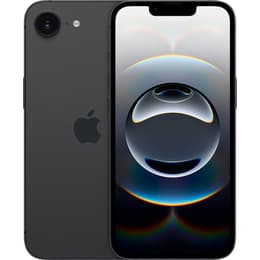
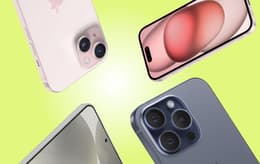
iPhone 15 • Locked T-Mobile vs iPhone 16e • Unlocked

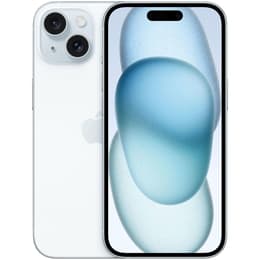
iPhone 15 • Locked T-Mobile
Starting at

Refurbished price:$379.00

Versus $699.00 new

See options
iPhone 16e • Unlocked
Starting at

Refurbished price:$362.00

Versus $599.00 new

See options

Ratings

The iPhone 15, released in September 2023, and the iPhone 16, launched in September 2024, represent consecutive generations of Apple's standard smartphone line. While both devices share a similar design philosophy and operate on Apple's iOS ecosystem, the iPhone 16 introduces advancements in processing power, camera capabilities, and enhanced repairability, building upon the foundation set by its predecessor.

Scores

Durability

When considering the long-term usability of these devices, several factors contribute to their practical lifespan, including software support and physical resilience.

  • Software Longevity: The iPhone 15 launched with iOS 17 and is compatible with iOS 18 and iOS 26, offering several years of software updates. The newer iPhone 16, launching with iOS 18, is also compatible with iOS 26.4, providing an additional year of expected software support compared to the iPhone 15.
  • Repairability: The iPhone 16 received an initial repairability score of 7 out of 10 from iFixit, a notable improvement over the iPhone 15's initial score of 4 out of 10. This improvement in the iPhone 16 is attributed to design changes that make components like the battery easier to access and replace. The iPhone 15's repairability score was later upgraded to 7/10 due to software changes allowing part calibration.
  • Physical Durability: Both models feature a Ceramic Shield front cover, a color-infused glass back, and an aluminum design, offering similar levels of resistance to drops and scratches. They also share an IP68 rating for water and dust resistance, allowing submersion up to 6 meters for 30 minutes.

Release Year

2023

2025

OS

iOS

iOS

Foldable

No

No

Performance

The performance of a smartphone is crucial for daily tasks, from navigating applications to engaging in demanding multimedia activities. Both the iPhone 15 and iPhone 16 offer robust performance, though the newer model brings generational improvements.

  • Processing Power: The iPhone 15 is powered by the A16 Bionic chip, which capably handles demanding applications and multitasking. The iPhone 16 features the newer A18 chip, providing a generational leap in processing capabilities for smoother operation and more efficient handling of complex tasks.
  • Multitasking and Responsiveness: The iPhone 15 comes with 6 GB of RAM, facilitating efficient multitasking. The iPhone 16 enhances this with 8 GB of LPDDR5X RAM, contributing to even more fluid transitions between applications and improved responsiveness, particularly for users who frequently switch between many apps.
  • Storage Options: Both devices offer identical storage configurations, available in 128GB, 256GB, and 512GB, providing ample space for applications, photos, and videos for most users.

Memory (GB)

6 GB

8 GB

Screen quality

The display is a primary interface for smartphone interaction, and both the iPhone 15 and iPhone 16 offer high-quality visual experiences with some subtle distinctions.

  • Display Technology and Clarity: Both models feature a 6.1-inch Super Retina XDR OLED display with a resolution of 2556x1179 pixels and a pixel density of 460 ppi. This OLED technology delivers deep blacks, vibrant colors, and excellent contrast, enhancing the viewing experience for photos, videos, and text.
  • Brightness and Outdoor Visibility: Both the iPhone 15 and iPhone 16 offer a typical brightness of 1000 nits, a peak HDR brightness of 1600 nits, and a peak outdoor brightness of 2000 nits, ensuring good visibility even in bright sunlight. The iPhone 16 also introduces a 1 nit minimum brightness, which can be beneficial for comfortable viewing in very dark environments.
  • Refresh Rate and Smoothness: Both the iPhone 15 and iPhone 16 maintain a standard 60Hz refresh rate. While this is sufficient for most daily tasks, users accustomed to higher refresh rate displays on other devices might notice a difference in the smoothness of scrolling and animations.

Resolution

1179 x 2556

2532x1170

Screen type

Super Retina XDR OLED

Super Retina XDR

Audiovisual

The camera systems on both the iPhone 15 and iPhone 16 are designed to capture high-quality images and videos, with the newer model introducing some notable enhancements.

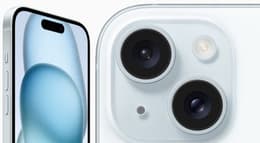
  • Main Camera System: Both devices feature an advanced dual-camera system with a 48MP Main camera that utilizes sensor-shift optical image stabilization and 100% Focus Pixels. This main sensor also enables a 2x telephoto option through a quad-pixel sensor, providing optical-quality zoom. The iPhone 16 introduces a vertical camera arrangement, a design change from the iPhone 15's diagonal layout.
  • Ultra Wide and Front Camera: The iPhone 15 includes a 12MP Ultra Wide camera with a 120-degree field of view. The iPhone 16 upgrades its 12MP Ultra Wide camera with autofocus and 100% Focus Pixels, enabling macro photography capabilities. Both models feature a 12MP TrueDepth front camera with autofocus for clear selfies and video calls.
  • Video Capabilities and Features: Both phones support 4K video recording at up to 60 frames per second, Cinematic mode up to 4K HDR at 30 frames per second, and Action mode up to 2.8K at 60 frames per second. The iPhone 16 further enhances video with spatial video recording at 1080p at 30 frames per second, a feature designed for immersive viewing experiences. The iPhone 16 also introduces a dedicated 'Camera Control' button for quick access to camera functions.

Main camera

48 megapixels

48MP

Front camera

12 megapixels

TrueDepth 12MP

Miscellaneous

Beyond core specifications, several practical elements differentiate the user experience and functionality of the iPhone 15 and iPhone 16.

  • Connectivity Standards: The iPhone 15 supports 5G, Gigabit LTE, Wi-Fi 6, and Bluetooth 5.3. The iPhone 16 steps up its wireless capabilities by supporting Wi-Fi 7, offering faster and more efficient wireless connections, alongside 5G and Bluetooth 5.3. Both devices include Apple's second-generation Ultra Wideband chip and Thread networking technology.
  • Ports and Biometrics: Both models feature a USB-C port for charging and data transfer, marking a significant shift from previous generations. For secure authentication, both rely on Face ID, enabled by the TrueDepth camera system.
  • Design and Handling: The iPhone 15 measures 147.6 x 71.6 x 7.8 mm and weighs 171 grams. The iPhone 16 maintains nearly identical dimensions at 147.6 x 71.6 x 7.8 mm but is slightly lighter at 170 grams. Both phones feature a comfortable design with rounded edges and a color-infused glass back.

Weight

171 oz

167 oz

Screen size (inches)

6.1

6.1

Network

5G

5G

SIM card

eSIM

eSIM

Carrier compatibility

T-Mobile

Unlocked

Connector

USB-C (USB 2)

USB-C

The iPhone 15 and iPhone 16 both offer compelling smartphone experiences, each catering to slightly different priorities. Users often praise the iPhone 15 for its introduction of the Dynamic Island and USB-C connectivity to the standard model, along with its capable camera system and robust performance for everyday use. Some common feedback for the iPhone 15 noted its 60Hz display as a point of comparison to other devices in its class.

The iPhone 16 builds upon its predecessor with a more advanced processor, increased RAM, and an enhanced camera system that includes spatial video recording and improved ultrawide capabilities for macro photography. The introduction of a dedicated Camera Control button and Wi-Fi 7 connectivity are also frequently highlighted as practical upgrades. User sentiment often points to the iPhone 16's improved repairability as a significant step forward.

Users prioritizing the latest performance enhancements, improved multitasking, and advanced camera features like spatial video and macro photography will find the iPhone 16 well-suited to their needs. Its higher RAM and newer processor offer a slightly more future-proof experience. Conversely, individuals seeking a highly capable device with a strong camera and modern features, without necessarily needing the absolute latest generational improvements, may find the iPhone 15 to be a suitable option. Both devices represent quality choices, and considering a quality-assured refurbished option for either model can be an eco-friendly alternative for making an informed purchasing decision.
See all articles

Our recent comparisons