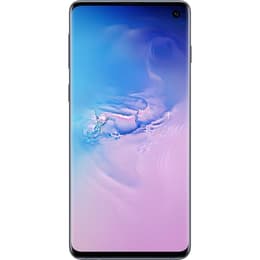
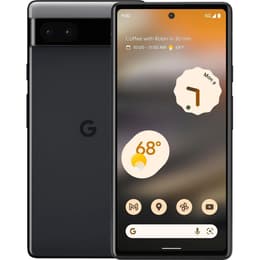

Galaxy S10 • Unlocked vs Google Pixel 6a • Unlocked

Galaxy S10 • Unlocked
Starting at

Refurbished price:$148.00

Versus $669.00 new

See options
Google Pixel 6a • Unlocked
Starting at

Refurbished price:$141.00

Versus $399.00 new

See options

Ratings

The Samsung Galaxy S10, released in March 2019, and the Google Pixel 6A, launched in July 2022, represent different approaches to smartphone design and functionality from their respective eras. While both offer a compact form factor and capable camera systems, the Pixel 6A benefits from a more modern processor and extended software support, whereas the Galaxy S10 features a more versatile camera hardware setup and a higher-resolution display.

Scores

Durability

The practical lifespan of a smartphone is significantly influenced by its release timeline and the duration of its software support. These two devices show a notable difference in this regard.

  • Software Longevity: The Google Pixel 6A, being a more recent device, is guaranteed Android OS and security updates until at least July 2027, offering a longer period of official support. In contrast, the Samsung Galaxy S10 received its last major Android OS update with Android 12 and its security updates for most models concluded around March 2023, meaning it no longer receives official software support.
  • Repairability: The Google Pixel 6A generally offers better repairability, with some assessments giving it a score of 7 out of 10, noting that components like the battery are relatively easier to access and replace. The Samsung Galaxy S10, however, received a lower repairability score of 3 out of 10 from iFixit, primarily due to extensive use of adhesive and components like the charging port being soldered to the motherboard, making repairs more challenging.
  • Expected Practical Lifespan: Users seeking a device with current software and security patches for the foreseeable future will find the Pixel 6A to be a more suitable option. The Galaxy S10, while still functional, operates without ongoing official updates, which can impact long-term security and compatibility with newer applications.

Release Year

2019

2022

Last OS Compatibility

No

Yes

OS

Android

Android

Foldable

No

No

Performance

Performance in smartphones is determined by a combination of processing power, memory, and software optimization, impacting how smoothly applications run and how efficiently the device handles tasks.

  • Processor Capabilities: The Google Pixel 6A is equipped with a more recent processor, which provides efficient handling of demanding applications and multitasking. This results in a responsive user experience, particularly for tasks involving artificial intelligence and machine learning. The Samsung Galaxy S10, while featuring a capable processor for its release year, may exhibit slower performance with newer, more resource-intensive applications compared to the Pixel 6A.
  • Multitasking and Storage: The Galaxy S10 typically comes with 8GB of RAM, which allows for smooth switching between multiple applications. It also offers storage options of 128GB or 512GB, with the added flexibility of expandable storage via a microSD card. The Pixel 6A features 6GB of RAM and 128GB of internal storage without expandable options, but its optimized software ensures efficient multitasking for most users.
  • Battery Behavior: The Pixel 6A houses a larger 4410 mAh battery, which, combined with software optimizations, often provides extended usage times, with users reporting it can last through a full day of heavy use. The Galaxy S10 has a 3400 mAh battery, and while it offered respectable battery life at its launch, its performance over time may vary, especially with heavy usage.

Memory (GB)

8 GB

6 GB

Screen quality

The display is a primary interface for smartphone interaction, and both devices offer distinct visual experiences based on their panel technology and specifications.

  • Display Technology and Resolution: Both devices feature OLED display technology, known for deep blacks and vibrant colors. The Samsung Galaxy S10 boasts a 6.1-inch Dynamic AMOLED display with a QHD+ resolution (3040x1440 pixels), offering a sharper and more detailed visual experience. The Google Pixel 6A also has a 6.1-inch OLED display but with a Full HD+ resolution (2400x1080 pixels), which is clear for everyday viewing but less dense than the S10's display.
  • Brightness and Refresh Rate: The Galaxy S10 can achieve higher peak brightness levels, which can be beneficial for outdoor visibility. Both the Galaxy S10 and the Pixel 6A feature a standard 60Hz refresh rate, meaning the screen updates 60 times per second. While this is sufficient for general use, users accustomed to higher refresh rate displays might notice a difference in smoothness during scrolling or animations.
  • Viewing Experience: The S10's higher resolution provides a more refined viewing experience for high-definition content, while the Pixel 6A's display offers good contrast and color accuracy for general media consumption.

Resolution

1440 x 3040

1080 x 2400

Screen type

Dynamic AMOLED

OLED

Audiovisual

Camera capabilities are a significant factor for many smartphone users, and these two devices approach photography with different hardware and software philosophies.

  • Camera System Capabilities: The Samsung Galaxy S10 features a triple-camera setup on the rear, including a 12MP wide-angle lens, a 12MP telephoto lens with 2x optical zoom, and a 16MP ultrawide lens, offering versatility in focal lengths. The Google Pixel 6A has a dual-camera system with a 12.2MP main wide-angle lens and a 12MP ultrawide lens, relying heavily on computational photography for image enhancement.
  • Photography Performance: The Pixel 6A is known for its consistent image quality, particularly in everyday and challenging lighting conditions, leveraging its advanced software processing for detailed and color-accurate photos. The Galaxy S10 provides a broader range of photographic options due to its dedicated telephoto lens, allowing for optical zoom without digital cropping. Both devices are capable of recording 4K video.
  • Audio for Media: The Galaxy S10 includes a 3.5mm headphone jack, offering a traditional audio output option. Both phones feature stereo speakers, providing an immersive audio experience for media consumption. Users generally praise the Pixel 6A's stereo speakers for their clarity and volume.

Main camera

12 megapixels

12.2 megapixels

Front camera

10 megapixels

8 megapixels

Miscellaneous

Beyond core performance and display, several practical elements contribute to the overall user experience, from connectivity to physical design.

  • Connectivity Options: Both devices support modern connectivity standards. The Samsung Galaxy S10 supports Wi-Fi 6 and Bluetooth 5.0. The Google Pixel 6A offers Wi-Fi 6E and Bluetooth 5.2, providing slightly newer wireless technologies. Both include NFC for contactless payments.
  • Port Types and Sensors: The Galaxy S10 features a USB-C port for charging and data transfer, along with a 3.5mm headphone jack. The Pixel 6A uses a USB-C port but omits the 3.5mm headphone jack. For biometric security, the S10 uses an ultrasonic in-display fingerprint sensor, while the Pixel 6A employs an optical in-display fingerprint sensor.
  • Weight, Dimensions, and Build Materials: The Galaxy S10 has a premium build with Gorilla Glass 6 on the front and Gorilla Glass 5 on the back, framed by aluminum, and carries an IP68 rating for dust and water resistance. It measures 149.9 x 70.4 x 7.8 mm and weighs 157g. The Pixel 6A features a Gorilla Glass 3 front, a plastic back, and an aluminum frame, with an IP67 rating. It is slightly larger and heavier at 152.2 x 71.8 x 8.9 mm and 178g.

Weight

6 oz

6 oz

Screen size (inches)

6.1

6.1

Network

LTE

5G

SIM card

Physical SIM

Physical SIM + eSIM

Carrier compatibility

Unlocked

Unlocked

User feedback for the Samsung Galaxy S10 often highlights its impressive display, versatile camera system with a dedicated telephoto lens, and the inclusion of a 3.5mm headphone jack as significant advantages. Some common criticisms included its in-display fingerprint sensor, which some users found inconsistent, and the presence of pre-installed applications. The Google Pixel 6A receives praise for its strong performance, excellent computational photography capabilities, and reliable battery life. However, its 60Hz display and the optical in-display fingerprint sensor have been noted as areas where it doesn't match some competitors.

Users prioritizing a highly detailed display, a dedicated telephoto camera, and the convenience of a headphone jack may find the Samsung Galaxy S10 well-suited to their needs. Its premium build materials also offer a distinct feel. Conversely, users who value long-term software support, consistent camera performance driven by advanced software, and a clean Android experience will likely lean towards the Google Pixel 6A. Its more modern internal components also provide a performance advantage for current applications. Both devices offer a compact form factor, making them comfortable for one-handed use. For those considering a more sustainable choice, exploring quality-assured refurbished options for either model can provide a reliable device while contributing to environmental responsibility.


See all articles

Our recent comparisons