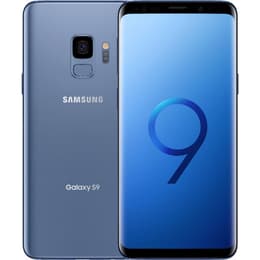
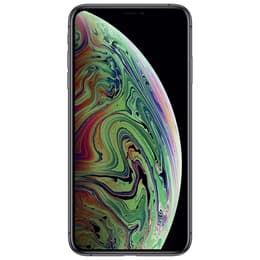

Galaxy S9 • Unlocked vs iPhone XS Max • Unlocked

Galaxy S9 • Unlocked
Starting at

Refurbished price:$106.00

Versus $399.00 new

See options
iPhone XS Max • Unlocked
Starting at

Refurbished price:$155.00

Versus $599.00 new

See options

Ratings

The Samsung Galaxy S9, released in March 2018, and the Apple iPhone Xs Max, launched in September 2018, represent flagship smartphones from their respective ecosystems. While both devices offer premium experiences, they cater to different user preferences through their distinct operating systems and hardware philosophies. The Galaxy S9 runs on Android, offering customization and an open ecosystem, whereas the iPhone Xs Max operates on iOS, known for its integrated services and user experience. Key differentiators include display size, camera capabilities, and biometric security methods.

Scores

Durability

When considering the long-term usability of these devices, their release timelines and software support are important factors.

  • Software Longevity: The Galaxy S9, an Android device, received major OS updates up to Android 10 and security patches until April 2022, marking its official end-of-life for software support. In contrast, the iPhone Xs Max, running iOS, typically receives major OS updates for a longer duration, having been upgradable to iOS 17, which generally translates to extended software support and access to newer features.
  • Repairability: The Galaxy S9 received a repairability score of 4 out of 10 from iFixit, indicating that repairs can be challenging due to strong adhesives and the glass design, particularly for battery and screen replacements. The iPhone Xs Max scored a 6 out of 10, with display and battery repairs being more accessible, though a cracked glass back often necessitates replacing the entire chassis.
  • Expected Lifespan: Both devices feature durable glass and metal constructions with IP68 water and dust resistance. However, the Galaxy S9's official software support has concluded, while the iPhone Xs Max continues to receive updates, potentially offering a longer practical lifespan for users who prioritize the latest software features and security.

Release Year

2018

2018

Last OS Compatibility

No

Yes

OS

Android

iOS

Foldable

No

No

Performance

Evaluating the performance of these smartphones involves looking at their storage options, battery behavior, and overall system responsiveness in daily use.

  • Storage and Expandability: The Galaxy S9 offers internal storage options of 64GB, 128GB, and 256GB, with the added flexibility of expanding storage up to 400GB via a microSD card. The iPhone Xs Max comes with 64GB, 256GB, or 512GB of internal storage, but it does not support external memory expansion.
  • Battery Performance: The Galaxy S9, equipped with a 3000 mAh battery, generally provides a full day of use for moderate users, though heavy usage may require an midday charge. The iPhone Xs Max, with a 3174 mAh battery, is often reported by users to last a full day with moderate to high usage, with some lighter users extending it to two days.
  • System Responsiveness: The Galaxy S9 handles demanding applications and multitasking smoothly, providing a responsive user experience. The iPhone Xs Max, with its integrated hardware and software, delivers fluid performance across applications and games, often noted for its speed and efficiency in handling intensive tasks.

Memory (GB)

4 GB

4 GB

Screen quality

The visual experience on both devices is a highlight, with each offering a distinct display technology and viewing characteristics.

  • Display Technology and Clarity: The Galaxy S9 features a 5.8-inch Super AMOLED display with a resolution of 2960 x 1440 pixels, offering deep blacks and vibrant colors. The iPhone Xs Max boasts a larger 6.5-inch Super Retina OLED display with a resolution of 2688 x 1242 pixels, also known for its rich colors and high contrast.
  • Brightness and Outdoor Visibility: The Galaxy S9's display can reach a peak brightness of 864 nits, contributing to good visibility in various lighting conditions. The iPhone Xs Max also provides strong brightness levels, ensuring content remains clear and readable even in bright outdoor environments.
  • Viewing Experience: The Galaxy S9's curved 'Infinity Display' design offers an immersive edge-to-edge viewing experience. The iPhone Xs Max provides a larger screen area, which can enhance media consumption and multitasking, making it well-suited for users who prefer a more expansive display.

Resolution

1440 x 2960

1242 x 2688

Screen type

Super AMOLED

Super Retina OLED

Audiovisual

Both smartphones offer advanced camera systems designed to capture high-quality photos and videos, though with different approaches and features.

  • Rear Camera Capabilities: The Galaxy S9 features a single 12MP rear camera with a variable aperture (f/1.5-f/2.4), allowing it to adapt to different lighting conditions for improved low-light performance. The iPhone Xs Max comes with a dual 12MP rear camera system, including a wide-angle (f/1.8) and a telephoto (f/2.4) lens, offering optical zoom and enhanced portrait mode capabilities with adjustable depth of field. Both include optical image stabilization.
  • Photography Performance: The Galaxy S9's variable aperture is designed to excel in challenging low-light scenarios, producing clear images. The iPhone Xs Max's dual camera system, combined with Smart HDR, delivers detailed photos with a wide dynamic range and improved low-light performance.
  • Video Recording and Audio: Both devices support 4K video recording at various frame rates. The Galaxy S9 offers super slow-motion video capabilities. The iPhone Xs Max introduced stereo audio recording for videos. Both provide clear microphone quality for calls and offer a good media consumption experience through their speakers.

Main camera

12 megapixels

12 megapixels

Front camera

8 megapixels

7 megapixels

Miscellaneous

Beyond core features, several practical elements differentiate the user experience between these two devices.

  • Connectivity and Ports: The Galaxy S9 includes a USB-C port for charging and data transfer, alongside a traditional 3.5mm headphone jack, offering broad compatibility with accessories. The iPhone Xs Max utilizes Apple's proprietary Lightning port and does not feature a headphone jack, requiring adapters for wired audio. Both support modern wireless connectivity standards like 4G LTE, Wi-Fi, and Bluetooth.
  • Biometric Security: The Galaxy S9 offers multiple biometric options, including a rear-mounted fingerprint sensor, an iris scanner, and facial recognition. The iPhone Xs Max relies solely on Face ID, an advanced facial recognition system for secure unlocking and authentication.
  • Design and Handling: The Galaxy S9 features a glass front and back with an aluminum frame, weighing 163g. The iPhone Xs Max has a glass front and back with a stainless steel frame, giving it a more substantial feel. Its larger 6.5-inch display contributes to its overall dimensions, which may impact one-handed use compared to the more compact 5.8-inch Galaxy S9.

Weight

6 oz

7 oz

Screen size (inches)

5.8

6.5

Network

LTE

LTE

SIM card

Physical SIM

Physical SIM + eSIM

Carrier compatibility

Unlocked

Unlocked

Connector

USB-C + Jack 3.5mm

Lightning

User feedback for the Galaxy S9 often praises its vibrant AMOLED display and the versatility of its variable aperture camera, particularly for low-light photography. Some common criticisms include concerns about battery life for heavy users and the fragility of its glass construction. The iPhone Xs Max is frequently lauded for its large, immersive OLED display, robust performance, and consistent camera quality, especially its portrait mode. Users have occasionally reported issues such as weak network reception or aggressive camera smoothening in selfies.

Users prioritizing an open operating system with extensive customization options, expandable storage, and a traditional headphone jack may find the Galaxy S9 well-suited to their needs. Conversely, individuals who value a larger display, a highly integrated ecosystem, longer software support, and advanced facial recognition might lean towards the iPhone Xs Max. Both devices, despite their age, continue to offer capable smartphone experiences. For those seeking a more sustainable choice, considering a quality-assured refurbished option for either model can provide an eco-friendly alternative to purchasing new.

See all articles

Our recent comparisons