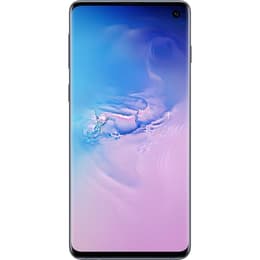
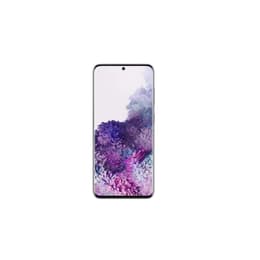
Galaxy S10 • Unlocked vs Galaxy S20 • Unlocked

Galaxy S10 • Unlocked
Starting at

Refurbished price:$158.00

Versus $669.00 new

See options
Galaxy S20 • Unlocked
Starting at

Refurbished price:$195.00

Versus $999.00 new

See options

Ratings

The Samsung Galaxy S10, released in March 2019, and the Samsung Galaxy S20, launched in March 2020, represent consecutive generations within Samsung's flagship smartphone series. While both devices operate on the Android platform and share a similar design philosophy, the Galaxy S20 introduced notable advancements in display technology, camera capabilities, and network connectivity, building upon the foundation laid by its predecessor.

Scores

Durability

When considering the long-term usability of these devices, several factors come into play, including their release timelines, software support, and repairability.

  • Release Timeline: The Galaxy S10 was released in March 2019, making it a year older than the Galaxy S20, which launched in March 2020. This age difference directly impacts their remaining software support.
  • OS Support: As the newer device, the Galaxy S20 is expected to receive major Android operating system updates and security patches for a longer duration than the Galaxy S10. This extended support can contribute to a more secure and feature-rich experience over time.
  • Repairability: The Galaxy S10 received a repairability score of 3 out of 10 from iFixit, indicating it is challenging to repair due to factors like extensive adhesive and a soldered charging port. The base Galaxy S20, however, scored 7 out of 10 for repairability, with accessible battery and screen components, though it still uses adhesive for the back cover and battery. This suggests the Galaxy S20 may be more straightforward to service for certain repairs.
  • Practical Lifespan: The Galaxy S20, with its newer hardware and 5G connectivity, is generally considered more future-proof, potentially offering a longer period of optimal performance and compatibility with emerging technologies.

Release Year

2019

2020

Last OS Compatibility

No

No

OS

Android

Android

Foldable

No

No

Performance

The performance of a smartphone is crucial for daily tasks, from launching applications to managing multiple processes simultaneously.

  • Storage Options: Both the Galaxy S10 and Galaxy S20 offer internal storage options typically starting at 128GB, with higher capacities available. Both models also support expandable storage via a microSD card, providing flexibility for users who require additional space for photos, videos, and applications.
  • Battery Behavior: The Galaxy S10 features a 3400 mAh battery, while the Galaxy S20 comes with a larger 4000 mAh battery. This larger capacity, combined with a more efficient processor, generally allows the Galaxy S20 to offer longer battery life for typical usage. However, enabling the S20's higher refresh rate display can increase power consumption. Users of the S10 have reported that battery degradation can become noticeable over time, sometimes requiring a replacement to maintain all-day use.
  • Processor Capabilities: The Galaxy S20 is equipped with a newer generation processor compared to the Galaxy S10, which translates to faster overall performance and improved power efficiency. In real-world use, this means the Galaxy S20 handles demanding applications, complex multitasking, and graphic-intensive games with greater fluidity and responsiveness. The S20 also benefits from faster internal storage technology (UFS 3.0) compared to the S10's (UFS 2.1), contributing to quicker app loading and data transfer speeds.
  • RAM: The Galaxy S10 typically comes with 8GB of RAM, while the Galaxy S20 often features 8GB or 12GB of RAM. More RAM generally allows for smoother multitasking and better retention of applications in memory, reducing the need for apps to reload when switching between them.

Memory

8 GB

8 GB

Screen quality

The visual experience is a key aspect of smartphone usage, and both devices offer high-quality displays with distinct characteristics.

  • Display Technology: Both the Galaxy S10 and Galaxy S20 utilize Samsung's Dynamic AMOLED display technology, known for producing deep blacks and vibrant colors. The Galaxy S20 features a Dynamic AMOLED 2X panel, which offers further refinements in color accuracy and brightness.
  • Resolution and Clarity: Both phones boast Quad HD+ resolutions, with the Galaxy S10 at 3040x1440 pixels and the Galaxy S20 at 3200x1440 pixels. This high pixel density ensures sharp text and detailed images for an immersive viewing experience.
  • Brightness Levels: The Galaxy S20 offers slightly improved peak brightness compared to the S10, which can enhance visibility in bright outdoor conditions.
  • Refresh Rate: A significant difference lies in the refresh rate. The Galaxy S10 features a standard 60Hz refresh rate. In contrast, the Galaxy S20 supports a smoother 120Hz refresh rate, which makes scrolling, animations, and gaming appear noticeably more fluid. It's important to note that the 120Hz refresh rate on the S20 is typically available at Full HD+ resolution, with the display reverting to 60Hz at its maximum Quad HD+ resolution to conserve battery life.
  • Screen Size: The Galaxy S10 has a 6.1-inch display, while the Galaxy S20 features a slightly larger 6.2-inch display. This minor difference in size contributes to a slightly more expansive viewing area on the S20.

Resolution

1440 x 3040

1440 x 3200

Screen type

Dynamic AMOLED

Dynamic AMOLED 2X

Audiovisual

Both the Galaxy S10 and Galaxy S20 offer versatile camera systems, but the newer model brings notable enhancements, particularly in zoom capabilities and video recording.

  • Camera System Configuration: Both devices feature a triple-camera setup on the rear, comprising a main wide-angle lens, an ultra-wide-angle lens, and a telephoto lens. The front cameras on both are 10MP.
  • Telephoto Lens: The Galaxy S10 includes a 12MP telephoto lens with 2x optical zoom. The Galaxy S20 significantly upgrades this with a 64MP telephoto lens, enabling 3x hybrid optical zoom and up to 30x digital zoom, offering greater flexibility for capturing distant subjects.
  • Ultra-wide Lens: The Galaxy S10 features a 16MP ultra-wide lens, while the Galaxy S20 has a 12MP ultra-wide lens.
  • Low-light and Everyday Photography: User reviews suggest the Galaxy S20 generally offers improved sharpness and color rendition in various lighting conditions, including low light, compared to the S10, though some inconsistencies in night mode processing have been noted.
  • Video Recording Quality: The Galaxy S10 is capable of recording video up to 4K resolution. The Galaxy S20 elevates video capabilities by introducing 8K video recording, a feature that provides significantly higher detail for compatible displays.
  • Audio Experience: While both phones deliver stereo sound, some user feedback indicates that the speaker quality on the Galaxy S10 might be perceived as fuller and more balanced than on the Galaxy S20.

Main camera

12 megapixels

12 megapixels

Front camera

10 megapixels

10 megapixels

Miscellaneous

Beyond core specifications, several practical elements differentiate the user experience between these two Galaxy models.

  • Connectivity Options: The Galaxy S10 supports 4G LTE networks, along with Wi-Fi 6 and Bluetooth 5.0. The Galaxy S20 introduces 5G connectivity, offering faster mobile data speeds in supported areas, in addition to Wi-Fi 6 and Bluetooth 5.0.
  • Port Types: A notable difference is the inclusion of a 3.5mm headphone jack on the Galaxy S10, providing compatibility with traditional wired headphones. The Galaxy S20, however, omits the headphone jack, relying solely on its USB-C port for charging, data transfer, and audio output via adapters or USB-C headphones. Both devices feature a USB-C port.
  • Useful Sensors: Both models incorporate an ultrasonic in-display fingerprint sensor for secure biometric authentication. The Galaxy S10 also includes a heart rate sensor, a feature not present on the S20.
  • Weight and Dimensions: The Galaxy S10 measures 149.9 x 70.4 x 7.8 mm and weighs 157g. The Galaxy S20 is slightly taller and heavier at 151.7 x 69.1 x 7.9 mm and 163g, but it is also slightly narrower, which can impact one-handed handling.
  • Build Materials: Both phones feature a premium construction with glass on the front and back, protected by Gorilla Glass, and an aluminum frame. The Galaxy S10 uses Gorilla Glass 6 on the front and Gorilla Glass 5 on the back, while the Galaxy S20 uses Gorilla Glass 6 on both the front and back.

Weight

6 oz

6 oz

Screen size (inches)

6.1

6.2

Network

LTE

LTE

SIM card

Physical SIM

Physical SIM + eSIM

Carrier compatibility

Unlocked

Unlocked

The Samsung Galaxy S10 and Galaxy S20 each offer a compelling smartphone experience, with user sentiment highlighting distinct strengths and considerations for both. For the Galaxy S10, common praise points include its premium feel, comfortable size, and the continued vibrancy of its AMOLED display. Users also appreciate the inclusion of a 3.5mm headphone jack and expandable microSD storage, features that have become less common in newer flagships. However, frequent criticisms revolve around its battery life, which can degrade over time, and the cessation of major Android updates, impacting its long-term software longevity.

The Galaxy S20 is often lauded for its smoother 120Hz display, significantly upgraded camera system with enhanced zoom capabilities, faster overall performance, and larger battery capacity. The addition of 5G connectivity is also a key advantage for users seeking faster network speeds. Conversely, some users have noted that the in-display fingerprint sensor can be inconsistent, and the speaker quality might not match the S10's. The higher refresh rate, while visually appealing, can also lead to increased battery drain if not managed.

Users prioritizing traditional features like a headphone jack, expandable storage, and a slightly more compact form factor may find the Galaxy S10 well-suited to their needs. Conversely, those who value a smoother display experience, advanced camera zoom, faster processing power, and future-ready 5G connectivity will likely lean towards the Galaxy S20. Both devices remain capable for everyday use, and opting for a quality-assured refurbished option can be an eco-friendly alternative for acquiring either model.


See all articles

Our recent comparisons