
Compare models

Galaxy Z Flip6 • Unlocked vs iPhone Air • Unlocked

  • 1-year warranty
  • Free standard shipping
  • Free 30-day returns
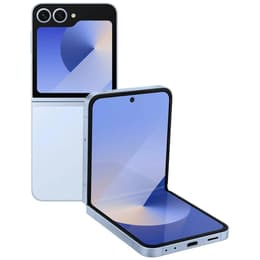
Galaxy Z Flip6 • Unlocked
Starting at

Refurbished price:$423.99

Versus $1,099.00 new

See options
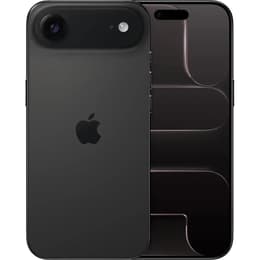
iPhone Air • Unlocked
Starting at

Refurbished price:$787.00

Versus $1,099.00 new

See options

Differences at a glance

The Samsung Galaxy Z Flip6 (2024) and the Apple iPhone Air (2025) represent two distinct approaches to modern mobile engineering, contrasting a foldable flip design with an ultra-thin slab form factor. While the Galaxy Z Flip6 runs on Android and features a unique folding screen mechanism, the iPhone Air operates on iOS and prioritizes an exceptionally slender physical profile. Both devices bring advanced capabilities to the smartphone market, but their differing designs and software ecosystems cater to completely different everyday preferences.

Available Models

Color

Storage (GB)

Scores

Durability

When evaluating structural longevity and software support, both devices offer robust frameworks designed to endure several years of regular daily use.

  • Software Support Timeline: The iPhone Air benefits from Apple's extended update schedule, while the Galaxy Z Flip6 features Samsung's multi-year software and security patch commitment.
  • Build and Repairability: The iPhone Air utilizes rigid titanium and reinforced glass to maintain its slim frame, whereas the Galaxy Z Flip6 incorporates a complex hinge design requiring careful handling of the folding inner screen.
  • Expected Lifespan: Both models deliver strong practical longevity, though traditional slab devices like the iPhone Air typically experience fewer mechanical vulnerabilities over extended timelines.

Release Year

2024

2025

Performance

Underneath their outer shells, both smartphones handle intensive tasks, daily multitasking, and media playback with high system responsiveness.

  • Storage Configurations: Both devices offer generous starting storage options paired with high-bandwidth memory to keep background applications active without stuttering.
  • Battery Behavior: The Galaxy Z Flip6 provides a split-cell battery design suited for moderate daily routines, while the iPhone Air balances its thin profile against energy-efficient hardware for standard daily endurance.
  • Processing Capabilities: Each device handles demanding mobile games, rapid app launching, and multi-window workflows smoothly through its current-generation processor architecture.

Screen quality

Display technology differs significantly between the two models, offering distinct visual experiences tailored to media consumption and daily interaction.

  • Display Technology: The Galaxy Z Flip6 features a folding dynamic display with a secondary outer screen for quick notifications, whereas the iPhone Air utilizes a rigid, high-resolution OLED panel.
  • Outdoor Brightness: Both screens reach high peak luminance levels, ensuring clear legibility and vibrant color reproduction under bright sunlight.
  • Refresh Rate and Smoothness: High refresh rate support on both devices guarantees fluid scrolling through web pages, documents, and social media feeds.

Audiovisual

Imaging hardware and media output capabilities are tailored to capture everyday moments and high-definition video with minimal effort.

  • Camera Systems: The Galaxy Z Flip6 employs a dual-lens rear setup featuring a high-resolution primary sensor, while the iPhone Air relies on a refined single main lens alongside computational photography features.
  • Low-Light Performance: Advanced image processing on both handsets brightens dimly lit scenes effectively while retaining natural shadow detail.
  • Audio Output: Built-in speaker configurations deliver clear voice calls and adequate sound output for casual video viewing or music playback.

Miscellaneous

Physical dimensions, connectivity standards, and daily handling characteristics vary notably due to their contrasting form factors.

  • Handling and Weight: The iPhone Air offers an exceptionally lightweight and thin profile that slips easily into pockets, while the Galaxy Z Flip6 folds in half to occupy minimal surface area when stored.
  • Connectivity Options: Both smartphones support modern fifth-generation cellular networks, high-speed Wi-Fi standards, and secure near-field communication for digital payments.
  • Biometric Security: The Galaxy Z Flip6 integrates a side-mounted fingerprint sensor alongside facial recognition, whereas the iPhone Air relies entirely on facial scanning technology.

Screen size (inches)

6.7

6.5

Network

5G

5G

SIM card

Physical SIM + eSIM

eSIM

Carrier compatibility

Unlocked

Unlocked

Connector

USB-C

USB-C

What the community thinks

Users comparing these two distinct devices often highlight the Galaxy Z Flip6 for its compact folding footprint and versatile cover screen convenience, though some note that the crease on the main display requires a brief adjustment period. Conversely, owners of the iPhone Air frequently praise its remarkably slender build and lightweight feel, while pointing out that its ultra-thin profile leaves less room for physical battery mass. Choosing between them depends entirely on personal preference regarding physical architecture and operating system ecosystems.

Users who prioritize a compact, pocket-friendly folding form factor with flexible viewing angles may prefer the Samsung Galaxy Z Flip6, while users prioritizing an ultra-slim, lightweight traditional design running iOS will find the iPhone Air well-suited to their needs. For consumers looking to make a sustainable choice, opting for a quality-assured refurbished option provides a practical way to acquire either model while supporting eco-friendly alternatives.

Our recent comparisons